
Watch on Sunday, Learn on Monday - Spanish GP: Knowing When It’s Time to Get Out
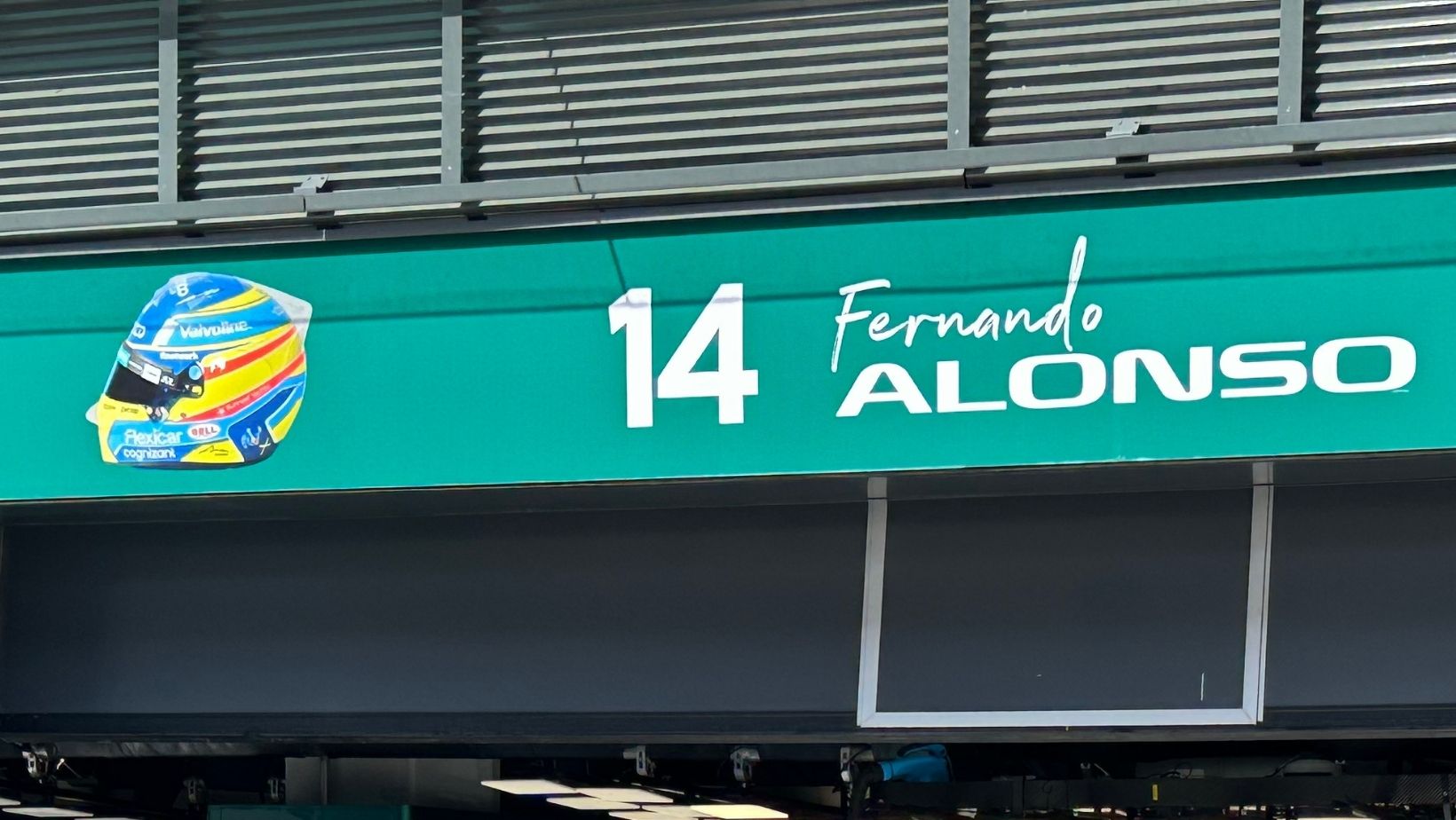
Fernando Alonso has spent much of his career proving people wrong.
At 45, he is still competing at the highest level of motorsport. He still believes he has the speed. He still has the hunger. And few people in Formula One would question his commitment.
But as Formula One arrived in Madrid for the Spanish Grand Prix, an interesting question was hanging over one of Spain's greatest sporting careers.
Will Fernando Alonso still be an F1 driver in 2027?
Perhaps more importantly, it raises a question that applies just as much in business as it does in sport:
How do you know when it's time to get out?
When persistence becomes the problem
We spend a lot of time in business celebrating perseverance.
Don't give up.
Keep pushing.
Stay resilient.
Believe in the plan.
Usually, that's good advice.
But there is another leadership skill that gets far less attention: recognising when continuing is no longer the best decision.
Alonso provides an interesting example because this isn't a driver desperately hanging onto a career that has obviously passed him by.
Quite the opposite.
He has repeatedly said he still feels fast and motivated. Earlier this season, he made the point that if he stops racing in Formula One, it won't necessarily be because he feels unable to compete. He has also made clear that his commitment to Aston Martin extends beyond his time behind the wheel.
Now, ahead of Madrid, Alonso has said there is "no urgency" to decide what happens next and that he could help Aston Martin in 2027 either behind the wheel or in another role.
That's an important distinction.
Leaving a role doesn't necessarily mean leaving the mission.
When everyone else wants you to stay
There is another interesting part of the Alonso story.
FIA President Mohammed Ben Sulayem has spoken publicly about wanting Alonso to remain in Formula One, suggesting that changes to the regulations could help persuade him to continue.
You can understand why.
Fernando Alonso is box office.
He is a double World Champion, one of the biggest personalities in the sport and, particularly in Spain, an enormously important figure for Formula One.
The sport benefits from Fernando Alonso being in it.
But that creates another leadership lesson.
The right time for you to leave isn't necessarily the right time for everyone else.
Businesses experience this all the time.
A founder stays because everyone tells them the company still needs them.
A CEO postpones succession because the board doesn't want to lose their experience.
A senior leader remains in a position because customers love them.
A high performer continues doing something because they have always been successful at it.
Sometimes the organisation's desire to keep someone becomes stronger than the individual's reason for staying.
And that's dangerous.
Ask a different question
The obvious question for Alonso is:
"Can I still race in Formula One?"
Judging by his own assessment of his performance, the answer is clearly yes.
But perhaps that isn't the question he needs to answer.
The better question might be:
"Is racing in Formula One still the best use of what I have to offer?"
That's a very different conversation.
And it's one senior leaders should probably have more often.
Can I still do this job?
Probably.
But do I still want to?
Am I still learning?
Am I still making the contribution I want to make?
Is the environment still allowing me to perform at my best?
Am I staying because of what comes next - or because I don't know what comes next?
And perhaps most importantly:
If I stepped away, what could I do next that might be even more valuable?
Moving on isn't giving up
One of the most interesting things Alonso has said about his future is that his commitment to Aston Martin doesn't depend upon him driving the car.
He wants the project to succeed.
That could mean racing.
But it could eventually mean contributing in another capacity.
There is an important lesson in that for founders, business owners and senior leaders.
Too often we equate our contribution with our position.
If I'm no longer CEO, what am I?
If I'm not running the business, am I still relevant?
If somebody else takes over, does that mean I've failed?
It doesn't.
Sometimes great leadership is about knowing when to move from doing to advising, from leading to mentoring, or from being at the centre of something to enabling somebody else to take it forward.
That transition can actually be one of the greatest contributions a leader makes.
Leave while people still want you to stay
There is an old piece of advice in entertainment: leave the audience wanting more.
There's something in that for leadership too.
The perfect time to leave isn't necessarily when you can no longer do the job.
By then, you may already have stayed too long.
Perhaps the better moment is when you are still capable, still respected and still able to choose what comes next.
Fernando Alonso doesn't appear to be deciding whether he can continue in Formula One.
He appears to be deciding whether he wants to.
And that's a position of strength.
Whatever he decides for 2027, there is a useful lesson for the rest of us.
Persistence matters.
Resilience matters.
Commitment matters.
But so does knowing when the next opportunity requires you to let go of the current one.
Sometimes the bravest decision isn't to keep going.
It's recognising you've achieved what you came to achieve, deciding what you want your next chapter to look like — and getting out while everyone is still asking you to stay.
Watch on Sunday. Learn on Monday.
The question isn't always: "Can I keep going?" - Sometimes it's: "Should I?"















.jpeg)
























.png)
.png)
.png)
.png)