
Getting the Right Leader for the Next Lap: What Cadillac's F1 leadership change can teach us
In Formula One, standing still is effectively the same as going backwards.
But that doesn't only apply to the development of the car. It applies to organisations and their leaders too.
Cadillac made one of the most significant leadership changes of the 2026 Formula One season when it announced that Graeme Lowdon would leave his position as Team Principal, to be replaced by former Alpine Executive Director Marcin Budkowski.
On the surface, it is easy to look at the Constructors' Championship and draw a straightforward conclusion.
Cadillac sit 11th. They have yet to score a point after the opening 11 races of their debut season. Something isn't working, so change the person at the top.
But leadership is rarely that simple.
In fact, there is a much more interesting business lesson within Cadillac's decision:
The person who is right to build an organisation isn't necessarily the person who is right to take it through its next stage.
And recognising that before it is too late can be one of the most difficult decisions a business makes.
What was Graeme Lowdon actually hired to do?
Before assessing whether a leader has succeeded, we first need to understand the job they were originally asked to do.
Lowdon wasn't simply appointed to run an established Formula One team.
He was helping to create one.
Cadillac appointed Lowdon before its Formula One entry had even been formally approved. He brought valuable experience from helping establish Virgin Racing, which subsequently became Marussia, and understood the enormous challenge involved in taking a new organisation onto the Formula One grid.
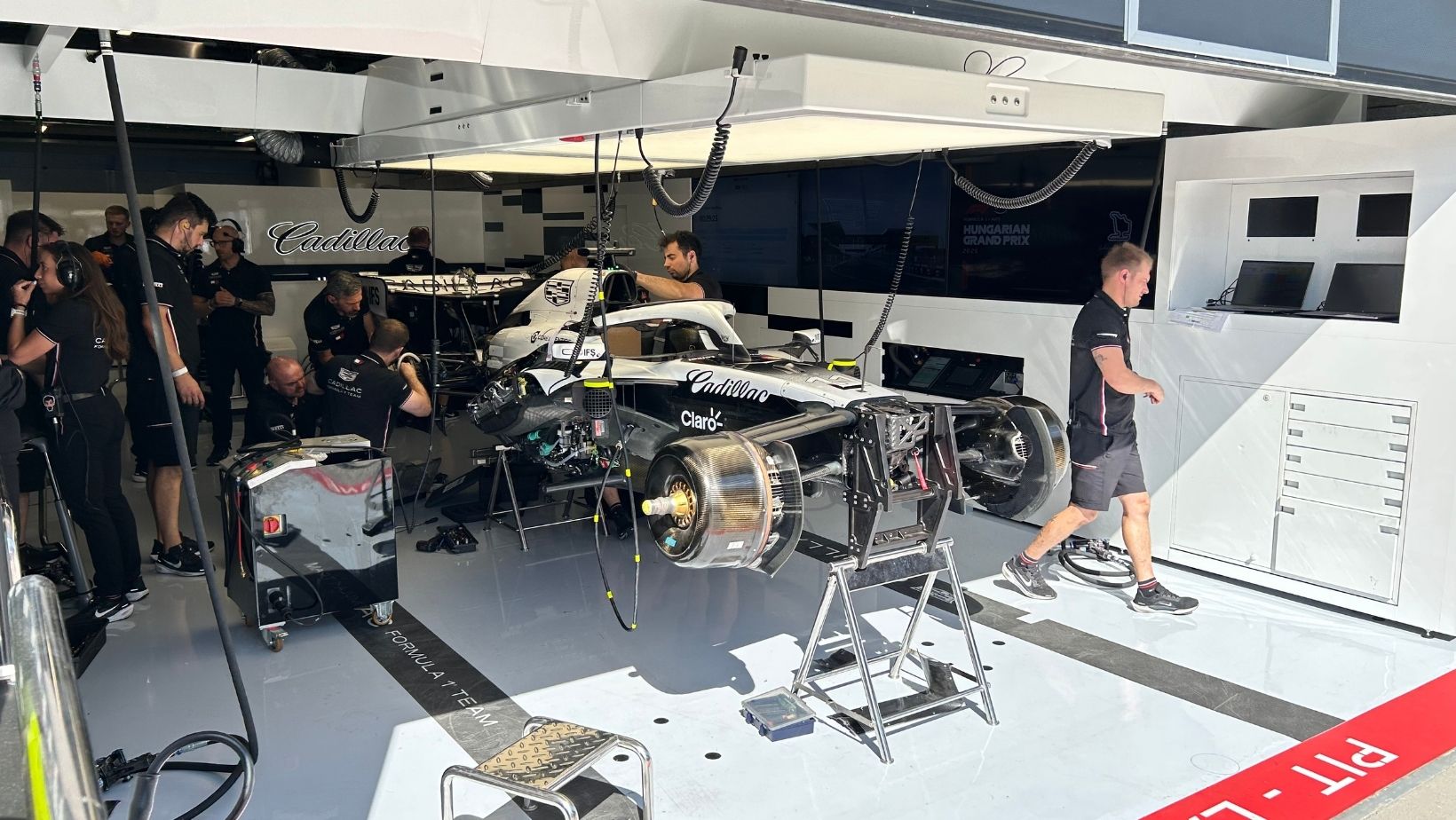
Cadillac had to recruit hundreds of people, establish facilities across different locations, develop systems and processes, build a Formula One car, integrate experienced drivers Valtteri Bottas and Sergio Perez, work with Ferrari as its initial power-unit supplier and somehow turn all of those individual elements into a functioning race team.
And they had to do it against a fixed deadline.
Whatever happens next, Cadillac made it to the grid.
That matters.
When announcing the change, Cadillac CEO Dan Towriss specifically acknowledged Lowdon's contribution to forming the team and establishing the foundations during its build-up phase.
That creates an important distinction.
A leadership change does not automatically mean the previous leader failed.
Sometimes they completed the job the organisation originally needed them to do.
Different stages require different leadership
We see this regularly in business.
An entrepreneur who is brilliant at taking a company from zero to £5 million turnover may not necessarily be the best person to take it from £5 million to £50 million.
The leader capable of rescuing an organisation in crisis might not be the person best suited to leading it once stability has returned.
Someone who excels at creating structure might eventually need to hand over to somebody who excels at driving performance through that structure.
Cadillac appears to be presenting its decision in similar terms.
The organisation has been built.
The team exists.
It has completed the first half of its first Formula One season.
The challenge is therefore changing.
Cadillac no longer simply needs to become a Formula One team.
It needs to become a competitive Formula One team.
Those sound like similar objectives.
They aren't.
Ask what the organisation needs next
One of the biggest mistakes businesses make when considering senior leadership changes is starting with the individual.
Is our CEO good enough?
Is our Managing Director performing?
Should we replace our Sales Director?
Perhaps there is a better question:
What does our organisation need from this role over the next three years?
Only then should we ask whether the current leader remains the right person to deliver it.
The answer might absolutely be yes.
But organisations change faster than job descriptions.
The skills required during rapid growth can be very different from those required during consolidation. The leadership needed during transformation can differ from that required once the transformation has happened.
Cadillac's appointment of Budkowski is particularly interesting in that context.
His career includes senior technical and leadership experience across Ferrari, McLaren, the FIA and Renault/Alpine. Cadillac has specifically highlighted the technical knowledge, strategic leadership, processes and performance mentality it believes he can bring to the organisation.
The emphasis has moved from building towards optimising.
Don't confuse loyalty with leadership
This is where these decisions become difficult.
The longer somebody has been involved in building an organisation, the greater the emotional connection.
They recruited people.
They created departments.
They fought fires.
They made sacrifices.
They probably made decisions without the resources their successor will eventually enjoy.
There can therefore be an understandable feeling that they have "earned the right" to lead the next chapter.
But leadership appointments cannot become rewards for previous service.
They have to be decisions about future requirements.
That doesn't mean ignoring loyalty.
It means recognising that one of the best ways of respecting someone's contribution is being clear about what they achieved, while still being prepared to ask whether the organisation now requires something different.
But don't change for the sake of changing
There is another side to this.
Changing a leader creates disruption.
People have built relationships with them. Employees understand their expectations. Customers, suppliers and stakeholders know how they operate.
A new leader inevitably resets some of those relationships.
That means businesses shouldn't mistake impatience for strategy.
Cadillac has zero points, but it is also only halfway through its first Formula One season.
Building an entirely new team capable of competing against organisations that have accumulated decades of knowledge was never going to produce instant success.
So before replacing a leader, businesses need to separate three things:
Performance. Potential. Context.
Are results genuinely below expectations?
Is the trajectory improving even if the headline numbers aren't there yet?
And are the expectations themselves realistic given where the organisation currently sits?
Changing leaders because the strategy requires different capabilities can be sensible.
Changing leaders simply because results haven't arrived quickly enough can create a cycle in which nobody stays long enough to build anything.
Make the transition about the organisation, not the personalities
There is also a lesson in how leadership succession is communicated.
Handled badly, replacing a senior leader creates winners and losers.
The incoming leader becomes the solution.
The outgoing leader becomes the problem.
That narrative can be deeply damaging.
It encourages people to distance themselves from previous decisions and potentially dismantle things that were actually working.
A better transition recognises continuity.
What should we keep?
What should we improve?
What now needs to change?
The strongest incoming leaders don't need to prove themselves by destroying everything their predecessor built.
They take the best of the existing organisation and add what the next stage requires.
In motorsport terms, you don't throw away a perfectly good car every time you want to make it faster.
You understand its strengths, identify its limitations and develop from there.
Five questions businesses should ask before changing a leader
Cadillac's decision provides a useful framework for any organisation considering leadership succession.
1. What was this leader originally brought in to achieve?
Judge them against the challenge they were actually given, rather than simply today's requirements.
2. Has the organisation entered a different phase?
Start-up, growth, turnaround, consolidation and high performance can require very different leadership capabilities.
3. What capabilities will we need over the next three to five years?
Define the future role before deciding who should occupy it.
4. Are we responding to evidence or emotion?
Poor short-term results can create pressure for visible action. Leadership changes should be strategic rather than simply symbolic.
5. How do we protect what is already working?
Succession should build upon organisational knowledge rather than automatically resetting it.
The Motorsport To Business lesson
Formula One teams constantly ask whether every component is still capable of delivering the performance required.
Leadership should be no different.
That doesn't mean continually replacing people.
Quite the opposite.
It means continually reviewing what the organisation needs and ensuring leaders are supported, developed and challenged to evolve alongside it.
Sometimes the leader evolves with the organisation.
Sometimes their role evolves.
And occasionally, the organisation reaches a point where somebody different is required.
Graeme Lowdon helped take Cadillac from an ambitious idea to a Formula One team sitting on the grid.
Marcin Budkowski has now been given a different challenge: helping turn that team into a competitive one.
Whether Cadillac has made the right decision will only become clear over time.
But there is an important lesson for every business leader within it.
Don't only ask whether your current leader is doing a good job.
Ask a harder question:
Are they the right leader for where you're trying to go next?
Because the leader who gets you onto the grid isn't always - sadly in a lot of cases - the leader who will take you to the podium.





.jpeg)









.png)
.png)
.png)
.png)