
Lawson and Tsunoda: Same System, Different Outcomes
Introduction
After back-to-back races in Melbourne and Shanghai, the Formula One season briefly pauses before the championship moves on to Suzuka. For Harry Benjamin, the break offers a rare opportunity to step away from the intensity of consecutive race weekends, review the early data from the opening rounds and reassess how the first narratives of the season are beginning to form.
In Part 3 of Behind the Mic, the focus shifts from immediate race-by-race adaptation to a broader reflection on development, pressure and progression within the Red Bull system. With Suzuka approaching and a longer gap in the calendar to follow, Harry's thoughts turns to two drivers whose paths have diverged despite emerging from the same environment: Liam Lawson and Yuki Tsunoda.
As the early phase of the season settles, this chapter explores what happens after the opportunity arrives. In Formula One, success is rarely defined by talent alone. Timing, expectation and the ability to reset can shape careers just as much as outright performance. Looking at the contrasting outcomes for Lawson and Tsunoda, the conversation moves beyond results to a bigger question about how drivers respond when the pressure shifts and the spotlight intensifies.
Over to you Harry!
For the full article and many more, subscribe to our online Knowledge Hub Motorsport To Business®+
Don't forget to use our exclusive discount code "M2BHarry" for 6 months for £1 per month*
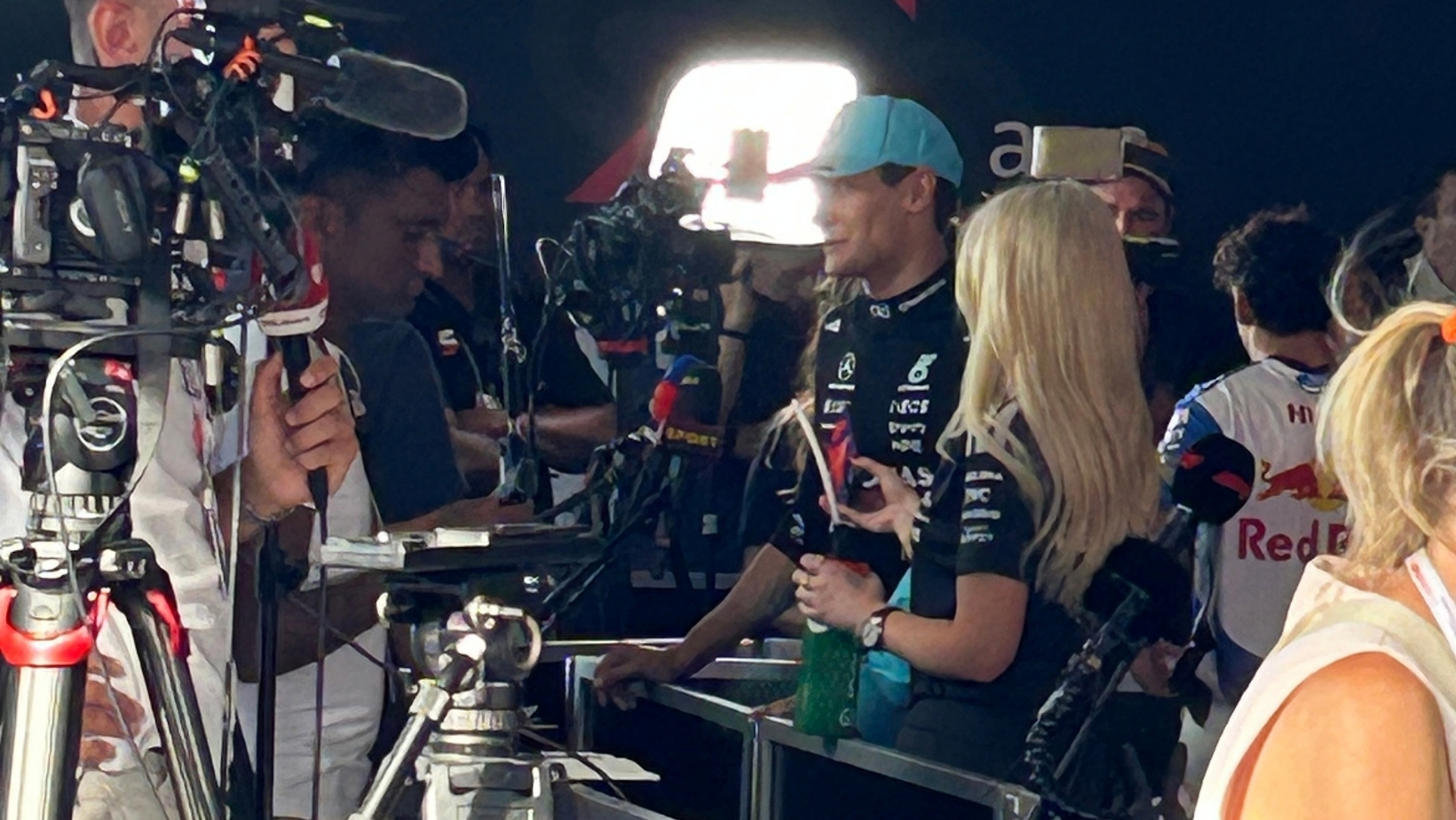
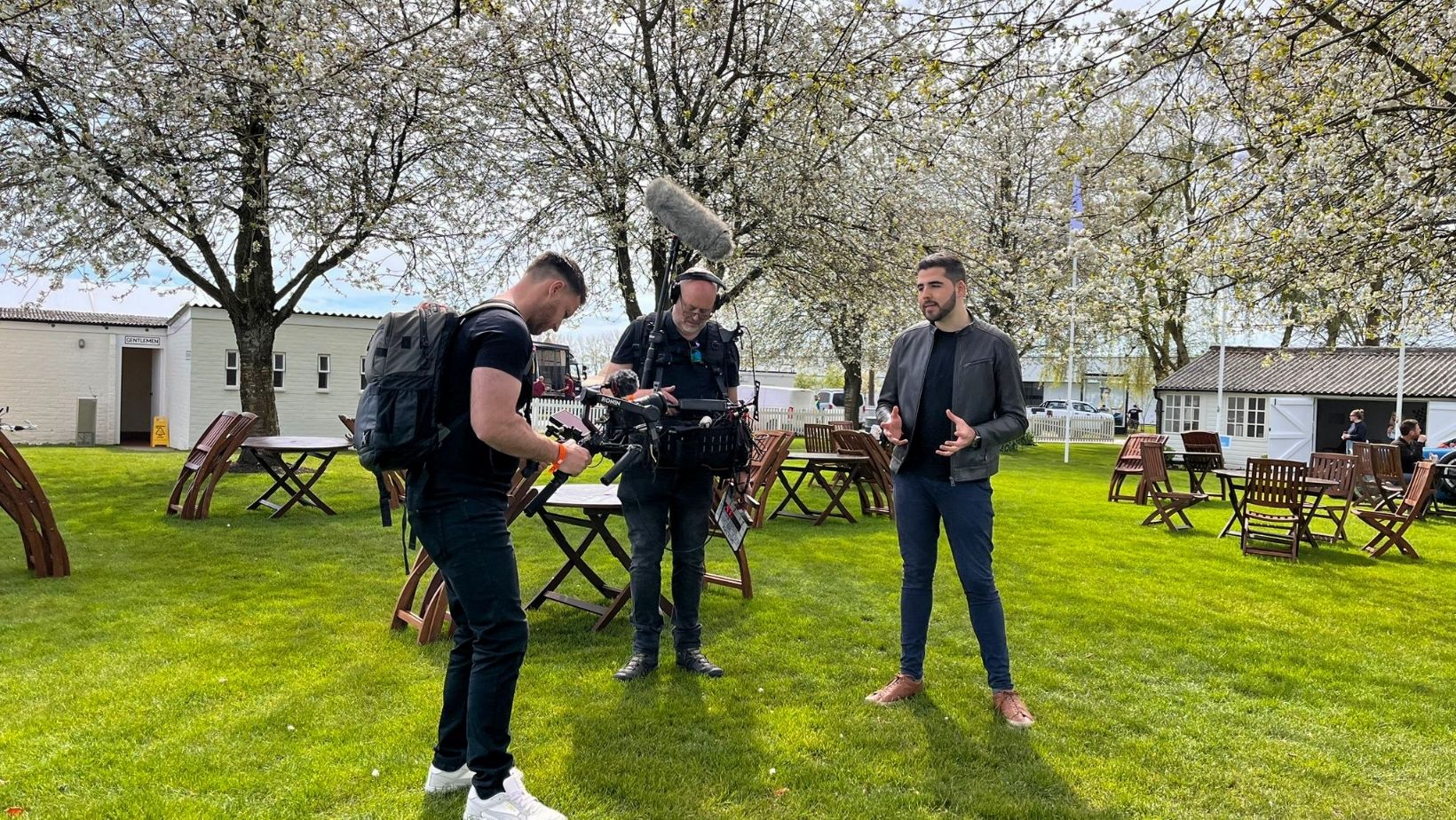
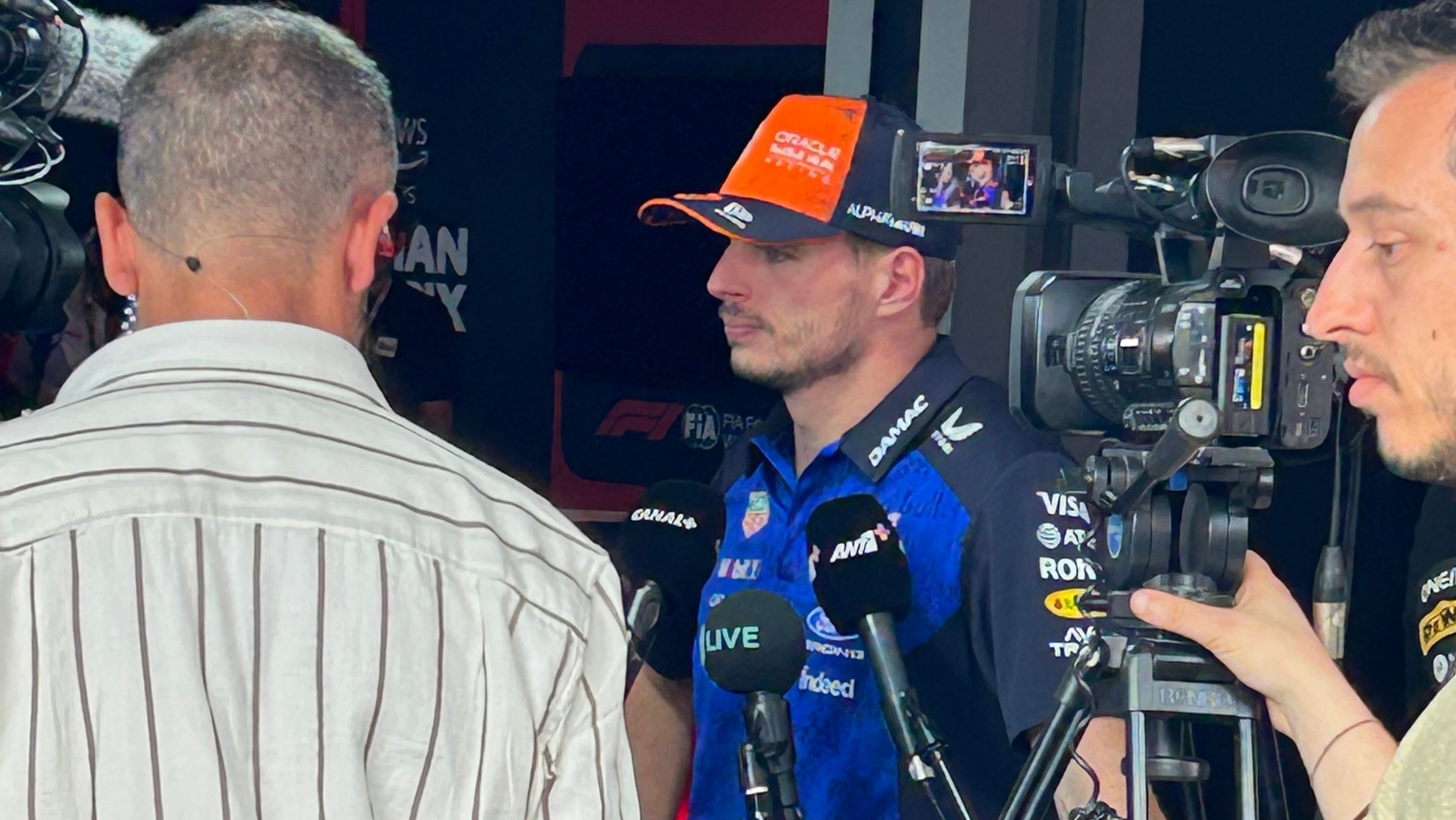
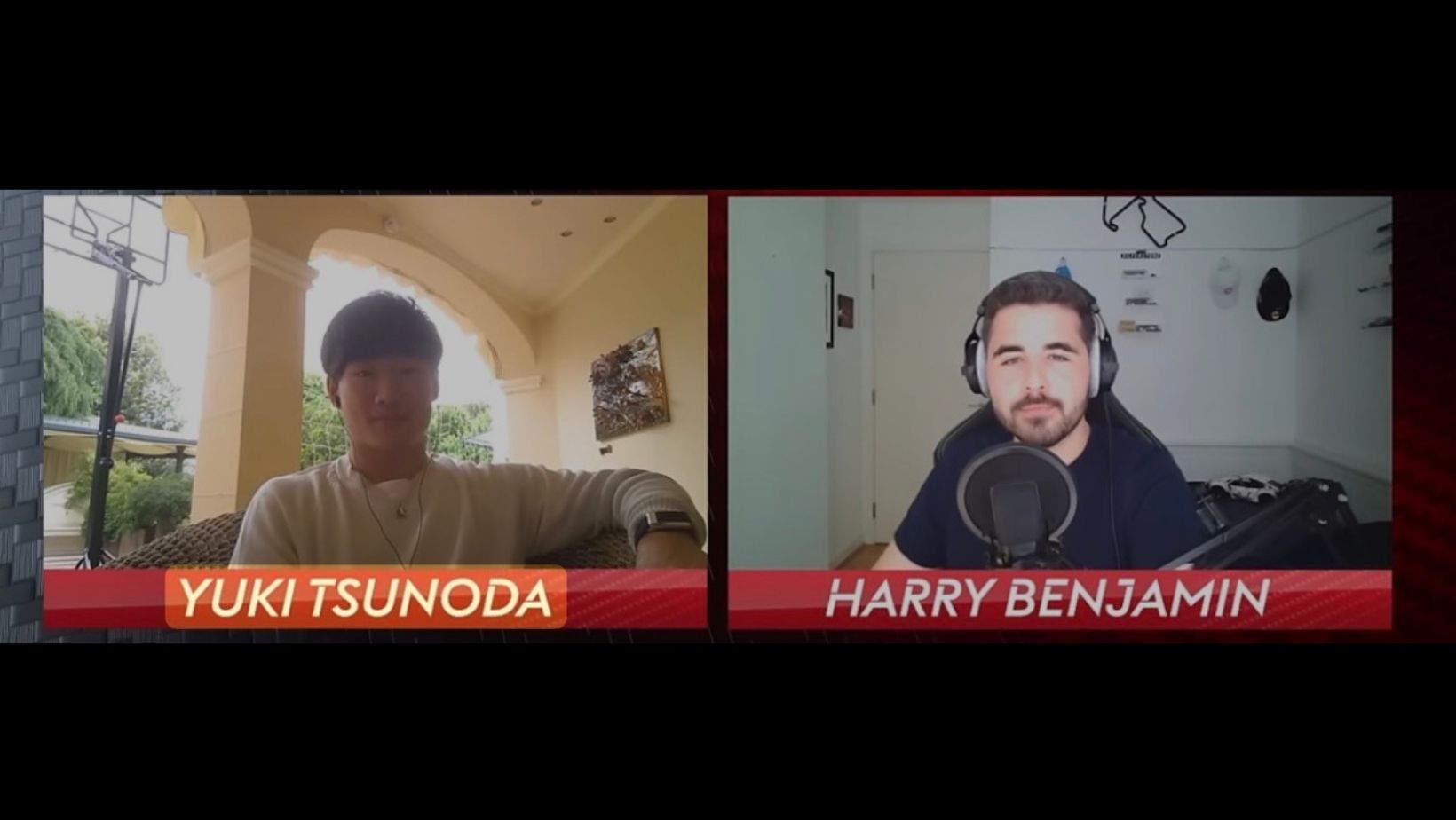
Harry interviews Yuki Tsunoda for Sky Sports F1 tv
*£1 per month for 6 months, then billed at £4.99 per month thereafter. Cancel anytime
Lawson and Tsunoda: Same System, Different Outcomes
Introduction
After back-to-back races in Melbourne and Shanghai, the Formula One season briefly pauses before the championship moves on to Suzuka. For Harry Benjamin, the break offers a rare opportunity to step away from the intensity of consecutive race weekends, review the early data from the opening rounds and reassess how the first narratives of the season are beginning to form.
In Part 3 of Behind the Mic, the focus shifts from immediate race-by-race adaptation to a broader reflection on development, pressure and progression within the Red Bull system. With Suzuka approaching and a longer gap in the calendar to follow, Harry's thoughts turns to two drivers whose paths have diverged despite emerging from the same environment: Liam Lawson and Yuki Tsunoda.
As the early phase of the season settles, this chapter explores what happens after the opportunity arrives. In Formula One, success is rarely defined by talent alone. Timing, expectation and the ability to reset can shape careers just as much as outright performance. Looking at the contrasting outcomes for Lawson and Tsunoda, the conversation moves beyond results to a bigger question about how drivers respond when the pressure shifts and the spotlight intensifies.
Over to you Harry!
Harry interviews Yuki Tsunoda for Sky Sports F1 tv
Part 3: Lawson and Tsunoda: Same System, Different Outcomes
After two back-to-back races in Australia and China, we’ve had a much needed week off!
A week to breathe, reset, recalibrate. Then Suzuka this weekend. The word iconic is thrown around quite a bit these days, but it’s appropriate in the case of this historical Japanese track. It’s also the last race before an extended gap following the cancellation of Bahrain and Saudi Arabia.
That in itself is a huge gap. Not one we see in F1 these days. This changes things, because in a sport that rarely stops, the moments where it does tend to be crucial.
In the build-up to Japan, as I’ve been going through my usual prep; notes, data, reviewing the first two races, I can’t help but cast my mind back to this point last year. To when Yuki Tsunoda was given his promotion to Red Bull. At the time, it felt like momentum. Like a natural progression, if slightly overdue. A driver stepping up into one of the most demanding seats in the sport.
A year on, the picture looks very different. Tsunoda was ultimately crushed by Max Verstappen, struggled to find consistency, and by the end of 2025 was moved out of the seat and into a reserve role. He’s not racing this season.
Alongside that, you have Liam Lawson.
Promoted to Red Bull, dropped after two races, reset and rebuilt. Now back with Racing Bulls and quietly putting together a solid start to 2026.
Same system. Same opportunity. Very different outcomes.
This is what makes this part of the season interesting. The early races are intense. Everything is new and compressed. There’s very little time to step back and assess. You’re reacting, adjusting, moving forward.
Then you get a gap, and in that gap, things tend to settle. You start to see what’s real and what isn’t. Which performances were sustainable. Which weren’t. Who has genuinely adapted to the new regulations, and who is still chasing their tail.
From a commentary perspective, those gaps are valuable. After Australia and China, I’ve found myself going back through stand out moments. What worked, what didn’t, what I might have missed in the heat of it. Live broadcasting doesn’t give you the luxury of revision in the moment, but it does give you the opportunity to refine between them.
That process of stepping back, reassessing, adjusting is where improvement actually happens. And it’s no different for drivers and teams.
Lawson’s trajectory over the past year is a good example of that. Being dropped at that level could easily derail momentum entirely. But instead, he’s rebuilt. Not dramatically, not loudly, but steadily. That tends to be the more sustainable kind of progress.
Tsunoda’s story is tougher, but equally instructive. Sometimes the step up comes and the expectations are higher and potentially unrealistic in this case. In an environment like Red Bull, where the benchmark is relentless, there’s very little room to find your footing.
The difference between the two isn’t just talent. It’s how they responded once the pressure shifted.
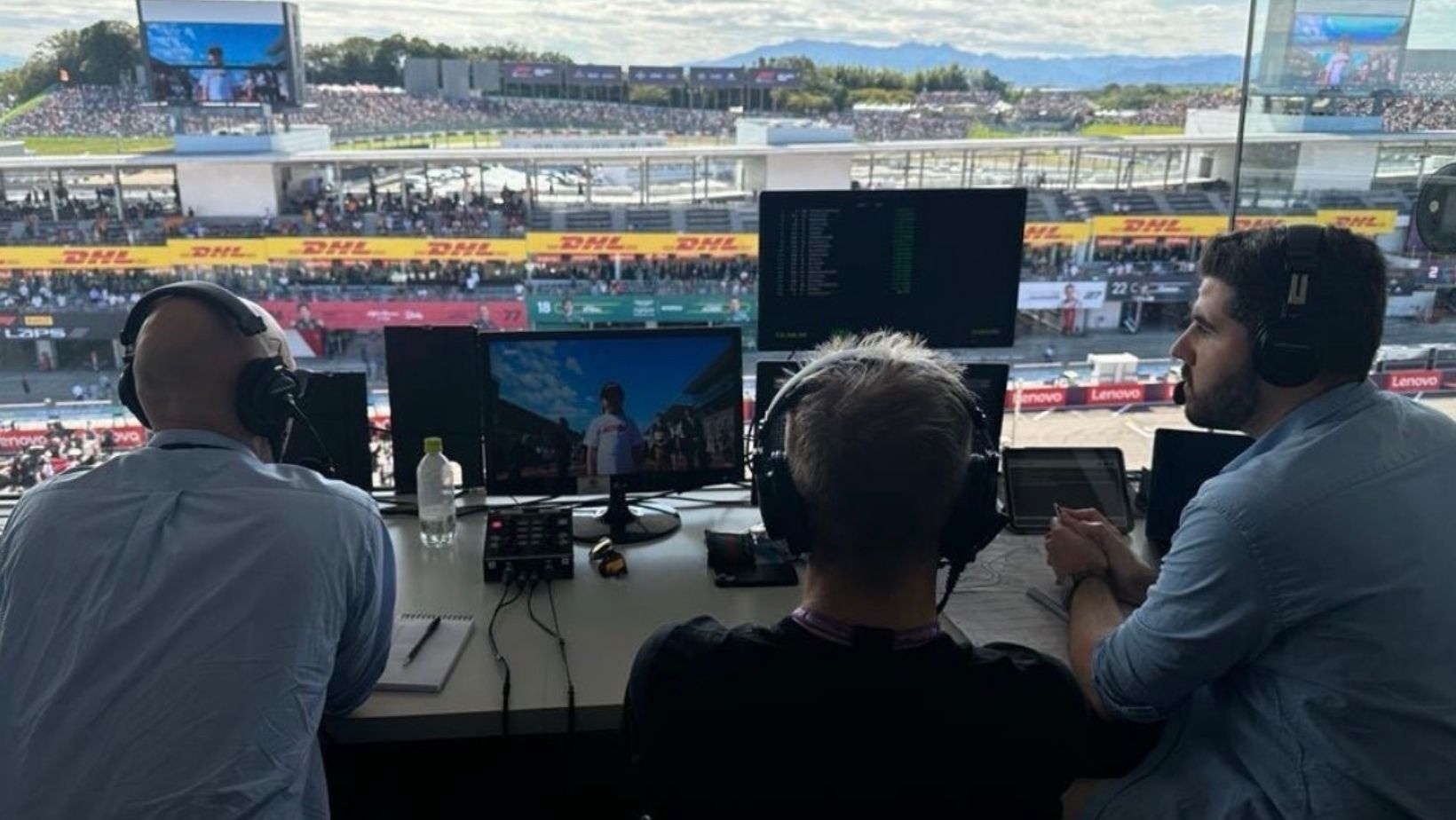
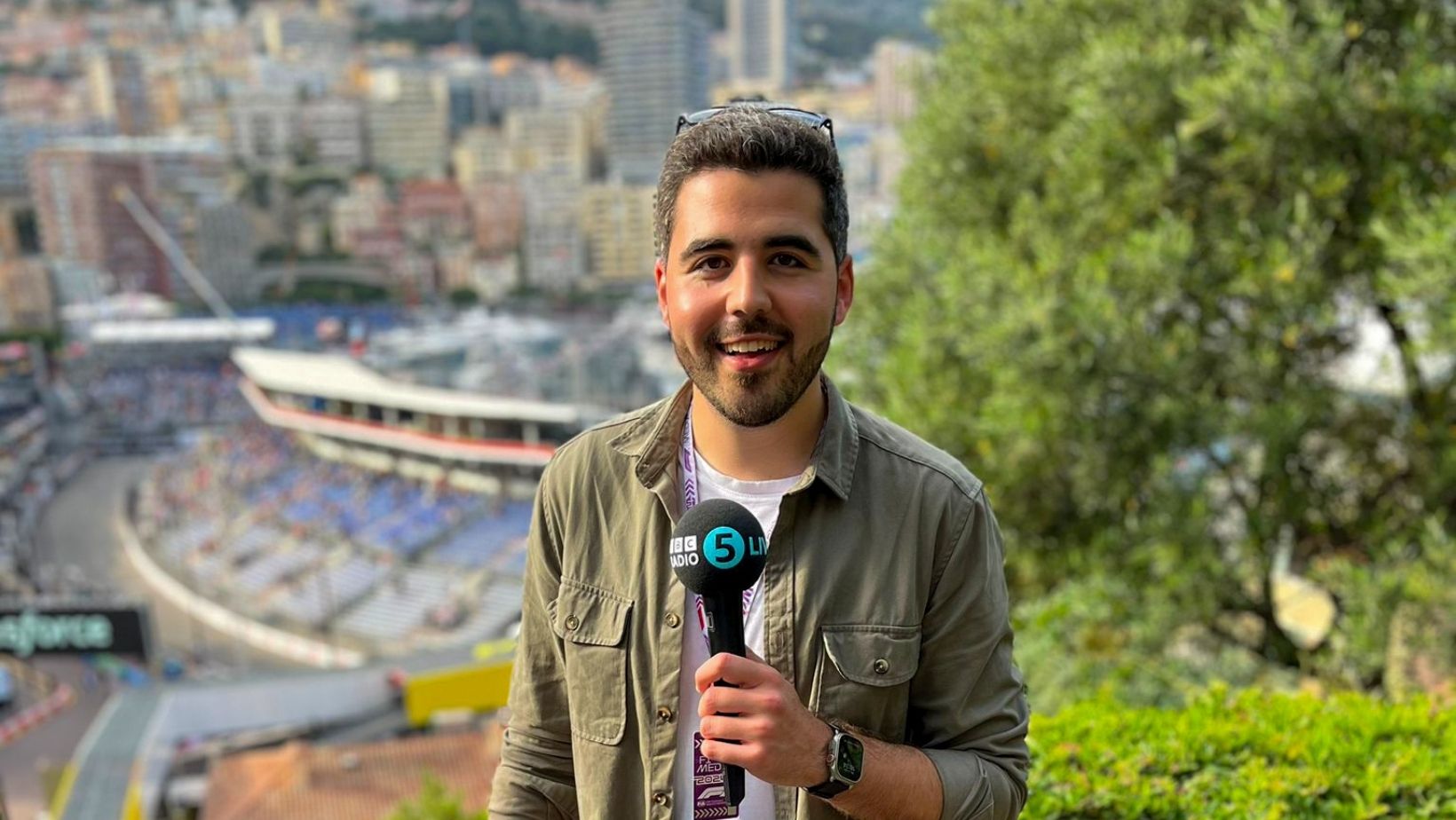
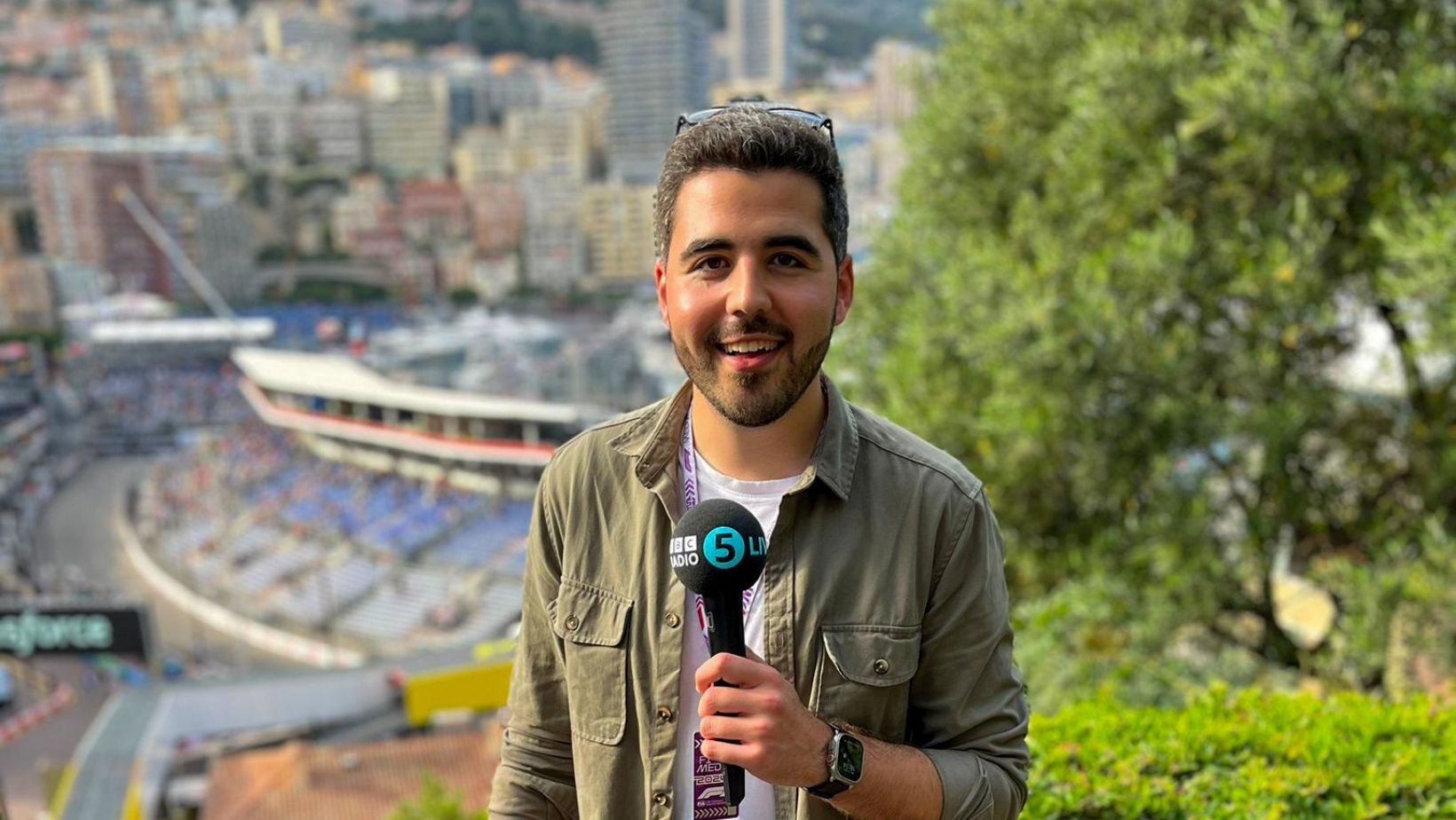
Harry in the Commentary Box overlooking the Suzuka straight. You can hear his live coverage for the Japanese Grand Prix on BBC Radio 5 Live this weekend
Suzuka, in many ways, is the perfect place for that to be tested again. It’s a circuit that demands precision and clarity. There’s no real margin for overdriving or instability. The flow of the lap punishes you almost immediately. You can’t carry chaos into a track like Suzuka and expect it to work.
Although this last week off is not a long time in the grand scheme of things. It will be fascinating to see who’s used this time wisely. Who has made small adjustments that start to show up over a lap? Who looks settled and who still looks like they’re searching?
In life I think we often focus heavily on performance under pressure. Big moments, big decisions, high stakes. But what tends to define outcomes over time is what happens in between those moments.
The reset.
The ability to step back, assess honestly, and make the right adjustments without overcorrecting.
Formula 1 is no different. The opening races give you momentum. The gaps give you clarity.
Often, it’s what you do in those quieter periods that shapes what happens next. In this sport, it’s not just how you perform when everything is happening quickly. It’s what you do when things slow down.
Lawson and Tsunoda: Same System, Different Outcomes
Introduction
After back-to-back races in Melbourne and Shanghai, the Formula One season briefly pauses before the championship moves on to Suzuka. For Harry Benjamin, the break offers a rare opportunity to step away from the intensity of consecutive race weekends, review the early data from the opening rounds and reassess how the first narratives of the season are beginning to form.
In Part 3 of Behind the Mic, the focus shifts from immediate race-by-race adaptation to a broader reflection on development, pressure and progression within the Red Bull system. With Suzuka approaching and a longer gap in the calendar to follow, Harry's thoughts turns to two drivers whose paths have diverged despite emerging from the same environment: Liam Lawson and Yuki Tsunoda.
As the early phase of the season settles, this chapter explores what happens after the opportunity arrives. In Formula One, success is rarely defined by talent alone. Timing, expectation and the ability to reset can shape careers just as much as outright performance. Looking at the contrasting outcomes for Lawson and Tsunoda, the conversation moves beyond results to a bigger question about how drivers respond when the pressure shifts and the spotlight intensifies.
Over to you Harry!
Harry interviews Yuki Tsunoda for Sky Sports F1 tv
Part 3: Lawson and Tsunoda: Same System, Different Outcomes
After two back-to-back races in Australia and China, we’ve had a much needed week off!
A week to breathe, reset, recalibrate. Then Suzuka this weekend. The word iconic is thrown around quite a bit these days, but it’s appropriate in the case of this historical Japanese track. It’s also the last race before an extended gap following the cancellation of Bahrain and Saudi Arabia.
That in itself is a huge gap. Not one we see in F1 these days. This changes things, because in a sport that rarely stops, the moments where it does tend to be crucial.
In the build-up to Japan, as I’ve been going through my usual prep; notes, data, reviewing the first two races, I can’t help but cast my mind back to this point last year. To when Yuki Tsunoda was given his promotion to Red Bull. At the time, it felt like momentum. Like a natural progression, if slightly overdue. A driver stepping up into one of the most demanding seats in the sport.
A year on, the picture looks very different. Tsunoda was ultimately crushed by Max Verstappen, struggled to find consistency, and by the end of 2025 was moved out of the seat and into a reserve role. He’s not racing this season.
Alongside that, you have Liam Lawson.
Promoted to Red Bull, dropped after two races, reset and rebuilt. Now back with Racing Bulls and quietly putting together a solid start to 2026.
Same system. Same opportunity. Very different outcomes.
This is what makes this part of the season interesting. The early races are intense. Everything is new and compressed. There’s very little time to step back and assess. You’re reacting, adjusting, moving forward.
Then you get a gap, and in that gap, things tend to settle. You start to see what’s real and what isn’t. Which performances were sustainable. Which weren’t. Who has genuinely adapted to the new regulations, and who is still chasing their tail.
From a commentary perspective, those gaps are valuable. After Australia and China, I’ve found myself going back through stand out moments. What worked, what didn’t, what I might have missed in the heat of it. Live broadcasting doesn’t give you the luxury of revision in the moment, but it does give you the opportunity to refine between them.
That process of stepping back, reassessing, adjusting is where improvement actually happens. And it’s no different for drivers and teams.
Lawson’s trajectory over the past year is a good example of that. Being dropped at that level could easily derail momentum entirely. But instead, he’s rebuilt. Not dramatically, not loudly, but steadily. That tends to be the more sustainable kind of progress.
Tsunoda’s story is tougher, but equally instructive. Sometimes the step up comes and the expectations are higher and potentially unrealistic in this case. In an environment like Red Bull, where the benchmark is relentless, there’s very little room to find your footing.
The difference between the two isn’t just talent. It’s how they responded once the pressure shifted.
Harry in the Commentary Box overlooking the Suzuka straight. You can hear his live coverage for the Japanese Grand Prix on BBC Radio 5 Live this weekend
Suzuka, in many ways, is the perfect place for that to be tested again. It’s a circuit that demands precision and clarity. There’s no real margin for overdriving or instability. The flow of the lap punishes you almost immediately. You can’t carry chaos into a track like Suzuka and expect it to work.
Although this last week off is not a long time in the grand scheme of things. It will be fascinating to see who’s used this time wisely. Who has made small adjustments that start to show up over a lap? Who looks settled and who still looks like they’re searching?
In life I think we often focus heavily on performance under pressure. Big moments, big decisions, high stakes. But what tends to define outcomes over time is what happens in between those moments.
The reset.
The ability to step back, assess honestly, and make the right adjustments without overcorrecting.
Formula 1 is no different. The opening races give you momentum. The gaps give you clarity.
Often, it’s what you do in those quieter periods that shapes what happens next. In this sport, it’s not just how you perform when everything is happening quickly. It’s what you do when things slow down.