Audi’s Formula One Bet: Inside a German Giant’s Long Road to the Grid
Precision, Patience and Power: How Audi Is Building Its F1 Future
When Audi confirmed it would enter Formula OneTM in 2026, the announcement landed less like a dramatic flourish and more like a carefully placed chess move. There was no bombast, no promise of instant glory, no claims of shaking the sport to its foundations. Instead, the German manufacturer framed its arrival as the product of long analysis, structural reform within Formula One itself, and a belief that the coming rule changes offered something rare in modern Grand Prix racing: a genuine opening for a new works team to compete on substance rather than sentiment.
For Audi, Formula One is not a marketing experiment or a short-term brand exercise. It is a strategic project designed to run for decades, integrating motorsport into the company’s technological, cultural and commercial DNA at a time when both the automotive industry and Formula One are undergoing profound transformation.
This deep dive examines how Audi reached that conclusion, how it is structuring the project internally, what success realistically looks like, and why the company believes Formula One remains worth the risk in an era when legacy carmakers are reassessing almost every major investment.

For the full article and many more, subscribe to our online Knowledge Hub Motorsport To Business®+
Audi’s Formula One Bet: Inside a German Giant’s Long Road to the Grid
Precision, Patience and Power: How Audi Is Building Its F1 Future
When Audi confirmed it would enter Formula OneTM in 2026, the announcement landed less like a dramatic flourish and more like a carefully placed chess move. There was no bombast, no promise of instant glory, no claims of shaking the sport to its foundations. Instead, the German manufacturer framed its arrival as the product of long analysis, structural reform within Formula One itself, and a belief that the coming rule changes offered something rare in modern Grand Prix racing: a genuine opening for a new works team to compete on substance rather than sentiment.
For Audi, Formula One is not a marketing experiment or a short-term brand exercise. It is a strategic project designed to run for decades, integrating motorsport into the company’s technological, cultural and commercial DNA at a time when both the automotive industry and Formula One are undergoing profound transformation.
This deep dive examines how Audi reached that conclusion, how it is structuring the project internally, what success realistically looks like, and why the company believes Formula One remains worth the risk in an era when legacy carmakers are reassessing almost every major investment.
The famous Audi Logo will be seen on the F1 grid from 2026 (photo: Dan Dennis)
Audi’s Motorsport DNA - Selective, Strategic, Successful
Audi’s decision-making in motorsport has rarely been impulsive. The company’s history is defined less by constant presence and more by targeted dominance.
In rallying, Audi redefined the sport in the early 1980s with quattro all-wheel drive, forcing competitors to follow or fade. At Le Mans, the brand reshaped endurance racing through diesel power, hybridisation and relentless operational discipline, winning 13 times between 2000 and 2014. In DTM, Audi balanced factory precision with entertainment value, while Formula E served as a low-risk laboratory for electric systems and software.
What these programmes shared was relevance. Audi entered categories where lessons could be transferred back to production cars, brand positioning or organisational capability. Formula One, for much of the 2000s and 2010s, did not meet that threshold. Costs were uncapped, power unit architectures were arcane, and the sport’s political structure favoured incumbents.
The shift came not from nostalgia, but from reform.
Formula One’s Structural Reset
Liberty Media’s acquisition of Formula One in 2017 marked the beginning of a deliberate transformation. While early changes focused on fan engagement and digital reach, deeper reforms followed.
The introduction of the budget cap in 2021 placed a hard ceiling on operational spending, fundamentally altering team economics. Although loopholes and grey areas remain, the cap has compressed performance gaps and forced efficiency.
Just as important was the competitive mindset shift. Formula One began actively courting manufacturers with a clearer value proposition: cost control, global exposure, and technical relevance aligned with road-car trends.
The 2026 power unit regulations crystallised this reset. Removing the MGU-H reduced cost and complexity. Increasing electrical output and mandating sustainable fuels aligned Formula One with regulatory and societal pressures facing automakers globally. For Audi, the sport finally resembled a platform where engineering effort could be justified beyond pure spectacle.
The Volkswagen Group Context
Audi’s Formula One entry cannot be understood in isolation from the wider Volkswagen Group. Internally, the decision followed years of debate over how motorsport fits into a future defined by electrification, software and mobility services.
Porsche’s parallel F1 discussions, which ultimately stalled, highlighted the complexity of aligning brand autonomy with Formula One’s governance. Audi’s route proved more straightforward: full control, full accountability.
Within VW Group, Audi has positioned Formula One as both a technology incubator and a cultural catalyst. Executives have described the project as a way to sharpen decision-making, attract elite engineering talent and maintain performance credibility as internal combustion engines fade from mainstream road use.
That framing matters. Formula One is expensive, but so is irrelevance.
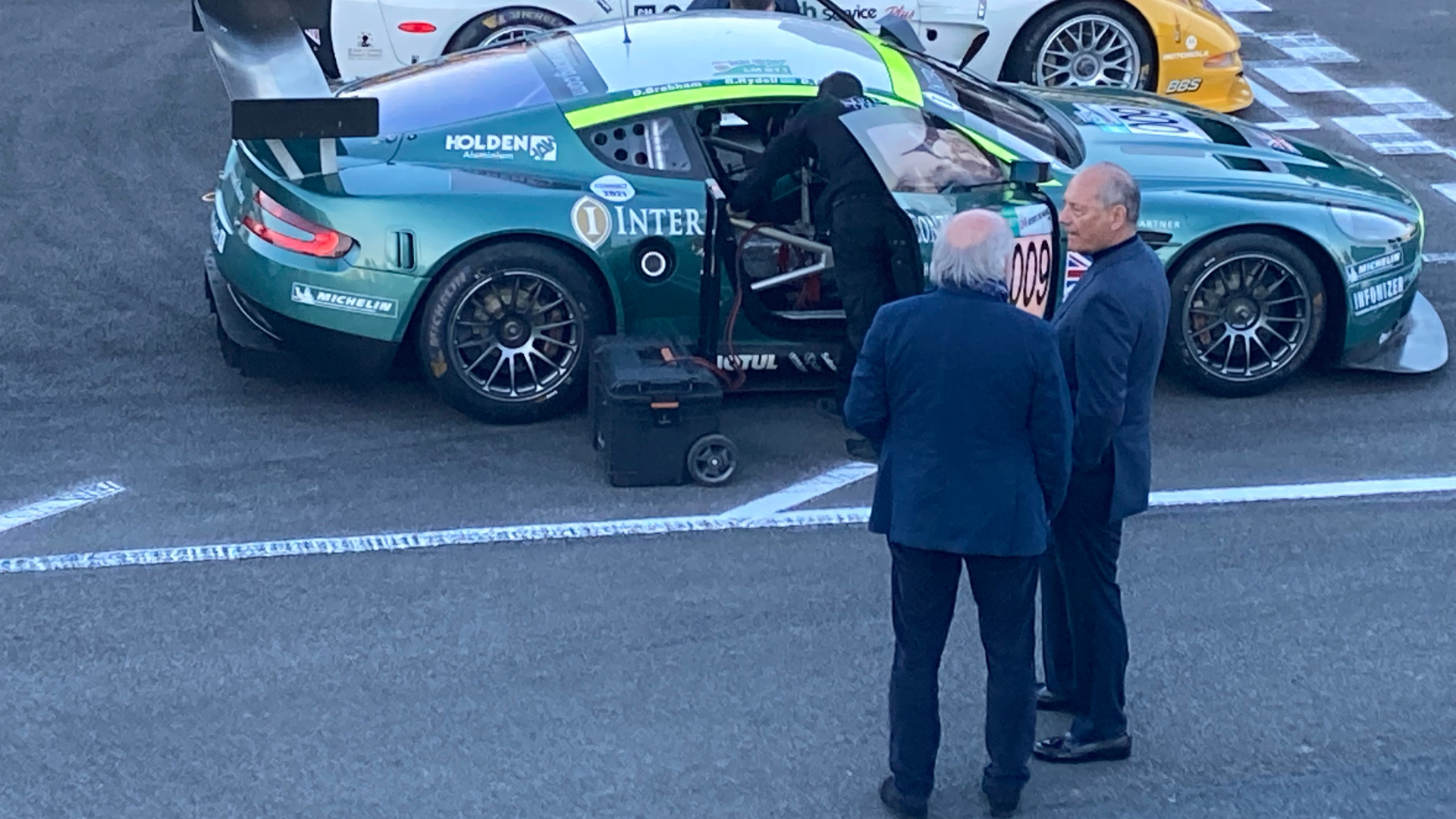
Audi dominated Le Mans and Endurance Racing for years, can they do the same in F1? (Photo: Dan Stock)
Buying Time: Why Sauber Made Sense
Rather than starting from scratch, Audi chose acquisition. Sauber Motorsport offered an existing Formula One operation with decades of experience, modern infrastructure and a clean ownership structure.
Crucially, Sauber provided certainty. A guaranteed grid slot avoids the political risk of new-team approval, while Hinwil’s facilities allowed Audi to scale quickly without years of construction.
The challenge is cultural integration. Sauber’s identity as a resilient, independent team must now evolve into that of a manufacturer-backed organisation without losing agility, a transition that has undone many past acquisitions in Formula One.
Audi’s response has been incremental change rather than wholesale replacement, preserving institutional knowledge while introducing new processes.
A Distributed Organisation
Audi’s Formula One project spans three countries by design.
Hinwil, Switzerland remains the operational hub, responsible for chassis development, race engineering and logistics. Neuburg an der Donau focuses on power unit development, housing dynos, energy recovery labs and software teams. The UK technology office taps into Motorsport Valley’s talent pool, particularly in aerodynamics and simulation.
This distributed model increases coordination complexity but mirrors how modern automotive R&D already functions across borders. Audi believes the trade-off is worthwhile to access the best talent.
Leadership: Experience Over Celebrity
Audi’s leadership appointments reflect pragmatism rather than star power. Mattia Binotto’s role overseeing technical integration signals a preference for systems thinkers over charismatic figureheads.
Race operations under Jonathan Wheatley emphasise execution, pit stops, strategy, race-day decisions, areas where new teams often falter.
The reporting structure is deliberately flat, reducing layers between engineers and decision-makers. In Formula One, time lost to hierarchy is often time lost on track.
Former Ferrari Team Principal Mattia Binotto heads up the Team alongside ex Red Bull Racing's Jonathan Wheatley (Photo: Xavi Yuahanda)
The Three-Phase Reality Check
Audi’s publicly stated three-phase plan is as much about expectation management as engineering.
Phase One (2026–2027): Survival and Signal
Early success is defined by reliability, operational cleanliness and development rate rather than results. Avoiding reputational damage is critical.
Phase Two (2028–2029): Proof of Concept
By this stage, Audi expects its technical philosophy to be visible in lap times. Podiums become realistic, mistakes less frequent.
Phase Three (2030–): Justifying the Investment
Championship contention is not optional in the long term. Without it, the project risks internal scrutiny.
Engineering the 2026 Power Unit & Chassis Philosophy in a New Era
Audi’s power unit programme is arguably the project’s most strategically important element. The simplified architecture masks extraordinary complexity in software, energy management and thermal efficiency.
The emphasis is on optimisation rather than brute force. Engineers speak of gains measured in fractions - recovery efficiency, deployment timing, cooling trade-offs.
Sustainable fuel development adds a parallel research stream, with implications extending beyond motorsport.
The 2026 chassis regulations reduce aerodynamic dependency, rewarding mechanical grip and balance. Audi’s design teams are approaching the car as a holistic system rather than an aero platform with wheels attached.
Correlation between simulation and reality remains the defining challenge. New teams historically struggle here; Audi is investing heavily to avoid that trap.
Talent, Recruitment and Retention
Formula One is a people business disguised as a technology sport. Audi faces fierce competition for experienced engineers, particularly under cost-cap restrictions that limit headcount flexibility.
The company’s pitch combines long-term stability, manufacturer backing and the chance to build something new, which is an appealing proposition in a paddock accustomed to constant churn.
Commercial Logic and Brand Discipline
Audi’s commercial strategy avoids overexposure. Partnerships with Revolut and adidas reinforce a premium, technology-led image rather than mass-market spectacle.
Formula One’s growth in the United States is particularly significant, offering Audi access to a younger, affluent audience. Internally, Audi will measure success across multiple dimensions: engineering transfer, brand metrics, talent acquisition and organisational learning. Championships matter, but so does capability-building.
Business's such as Revolut and Adidas have joined the team as partners
Historical Failure Case Studies: What Formula One Has Taught Manufacturers
No manufacturer enters Formula One without believing it will be different. History suggests otherwise. The sport’s modern era is littered with ambitious automotive brands that arrived with resources, confidence and technical pedigree and left with bruised balance sheets and unfinished narratives. For Audi, understanding these failures is not an academic exercise but a strategic necessity.
Toyota: Unlimited Resources, Limited Agility
Toyota’s Formula One programme, active from 2002 to 2009, remains the most cited cautionary tale. Backed by arguably the deepest pockets the sport has ever seen, Toyota built an immaculate facility in Cologne, recruited aggressively and pursued total vertical integration.
What it lacked was urgency. Decision-making structures mirrored corporate automotive processes rather than racing realities. Layers of approval slowed development, and internal risk aversion dulled innovation. Despite occasional podiums, Toyota never won a race and exited abruptly during the global financial crisis.
Audi’s lesson: speed of decision-making matters more than scale. Its flatter leadership structure and phased expectations are designed to avoid paralysis by process.
BMW: Performance Without Patience
BMW’s return to Formula One through its partnership with Williams and later full ownership of Sauber showed flashes of brilliance, with the team winning a race with Robert Kubica in 2008.
But BMW’s commitment proved conditional. When immediate title contention failed to materialise - along with a credit crunch - corporate support waned. The programme ended in 2009, leaving behind a sense of unrealised potential.
Audi’s lesson: long-term commitment must be insulated from short-term performance swings. Audi’s public 2030 horizon is as much an internal promise as an external one.
Jaguar: Identity Without Direction
Under the Ford Motor Group's Leadership the Jaguar team’s early-2000s F1 effort, from the ashes of Stewart Grand Prix, suffered from unclear purpose. The brand oscillated between marketing showcase and performance programme but never fully committing to either. Frequent leadership changes compounded instability.
The team ultimately found success once it was purchased for $1 dollar in 2004 by Red Bull and was culturally rebuilt.
Audi’s lesson: clarity of intent is critical. Audi has positioned its F1 team as a works engineering project first, brand platform second.
Manafacturers such as Toyota have come and gone over the years with little success
Our Key "Motorsport to Business" takeaways:
Audi’s Formula One journey offers clear takeaways for business leaders:
Long-term vision over instant results
Just as Audi is targeting 2030 championship contention, businesses benefit from multi-phase planning and patience.
Integration of distributed teams:
Coordinating operations across multiple geographies requires strong communication, clear roles, and shared objectives.
Learning from failure:
Studying competitors’ missteps, as Audi will have done with Toyota, BMW and Jaguar, provides strategic insights applicable beyond racing.
Phased risk management:
Incremental investment and iterative learning allow organisations to scale capability without overexposing resources.
Talent as a differentiator:
Recruitment, retention, and culture are often more decisive than technology alone.
Alignment of purpose and culture:
Clear organisational intent ensures that strategy, brand, and execution reinforce each other.
Data-driven decision-making under uncertainty:
Like F1 engineering, modern business requires simulation, modeling, and rapid iteration to stay competitive.
In short, Audi demonstrates that motorsport is not just a marketing exercise, it is a live laboratory for operational excellence, strategic patience, and organisational learning. For business leaders, these lessons translate into frameworks for managing complexity, risk, and innovation in any high-stakes environment.
Audi’s Formula One Bet: Inside a German Giant’s Long Road to the Grid
Precision, Patience and Power: How Audi Is Building Its F1 Future
When Audi confirmed it would enter Formula OneTM in 2026, the announcement landed less like a dramatic flourish and more like a carefully placed chess move. There was no bombast, no promise of instant glory, no claims of shaking the sport to its foundations. Instead, the German manufacturer framed its arrival as the product of long analysis, structural reform within Formula One itself, and a belief that the coming rule changes offered something rare in modern Grand Prix racing: a genuine opening for a new works team to compete on substance rather than sentiment.
For Audi, Formula One is not a marketing experiment or a short-term brand exercise. It is a strategic project designed to run for decades, integrating motorsport into the company’s technological, cultural and commercial DNA at a time when both the automotive industry and Formula One are undergoing profound transformation.
This deep dive examines how Audi reached that conclusion, how it is structuring the project internally, what success realistically looks like, and why the company believes Formula One remains worth the risk in an era when legacy carmakers are reassessing almost every major investment.
The famous Audi Logo will be seen on the F1 grid from 2026 (photo: Dan Dennis)
Audi’s Motorsport DNA - Selective, Strategic, Successful
Audi’s decision-making in motorsport has rarely been impulsive. The company’s history is defined less by constant presence and more by targeted dominance.
In rallying, Audi redefined the sport in the early 1980s with quattro all-wheel drive, forcing competitors to follow or fade. At Le Mans, the brand reshaped endurance racing through diesel power, hybridisation and relentless operational discipline, winning 13 times between 2000 and 2014. In DTM, Audi balanced factory precision with entertainment value, while Formula E served as a low-risk laboratory for electric systems and software.
What these programmes shared was relevance. Audi entered categories where lessons could be transferred back to production cars, brand positioning or organisational capability. Formula One, for much of the 2000s and 2010s, did not meet that threshold. Costs were uncapped, power unit architectures were arcane, and the sport’s political structure favoured incumbents.
The shift came not from nostalgia, but from reform.
Formula One’s Structural Reset
Liberty Media’s acquisition of Formula One in 2017 marked the beginning of a deliberate transformation. While early changes focused on fan engagement and digital reach, deeper reforms followed.
The introduction of the budget cap in 2021 placed a hard ceiling on operational spending, fundamentally altering team economics. Although loopholes and grey areas remain, the cap has compressed performance gaps and forced efficiency.
Just as important was the competitive mindset shift. Formula One began actively courting manufacturers with a clearer value proposition: cost control, global exposure, and technical relevance aligned with road-car trends.
The 2026 power unit regulations crystallised this reset. Removing the MGU-H reduced cost and complexity. Increasing electrical output and mandating sustainable fuels aligned Formula One with regulatory and societal pressures facing automakers globally. For Audi, the sport finally resembled a platform where engineering effort could be justified beyond pure spectacle.
The Volkswagen Group Context
Audi’s Formula One entry cannot be understood in isolation from the wider Volkswagen Group. Internally, the decision followed years of debate over how motorsport fits into a future defined by electrification, software and mobility services.
Porsche’s parallel F1 discussions, which ultimately stalled, highlighted the complexity of aligning brand autonomy with Formula One’s governance. Audi’s route proved more straightforward: full control, full accountability.
Within VW Group, Audi has positioned Formula One as both a technology incubator and a cultural catalyst. Executives have described the project as a way to sharpen decision-making, attract elite engineering talent and maintain performance credibility as internal combustion engines fade from mainstream road use.
That framing matters. Formula One is expensive, but so is irrelevance.
Audi dominated Le Mans and Endurance Racing for years, can they do the same in F1? (Photo: Dan Stock)
Buying Time: Why Sauber Made Sense
Rather than starting from scratch, Audi chose acquisition. Sauber Motorsport offered an existing Formula One operation with decades of experience, modern infrastructure and a clean ownership structure.
Crucially, Sauber provided certainty. A guaranteed grid slot avoids the political risk of new-team approval, while Hinwil’s facilities allowed Audi to scale quickly without years of construction.
The challenge is cultural integration. Sauber’s identity as a resilient, independent team must now evolve into that of a manufacturer-backed organisation without losing agility, a transition that has undone many past acquisitions in Formula One.
Audi’s response has been incremental change rather than wholesale replacement, preserving institutional knowledge while introducing new processes.
A Distributed Organisation
Audi’s Formula One project spans three countries by design.
Hinwil, Switzerland remains the operational hub, responsible for chassis development, race engineering and logistics. Neuburg an der Donau focuses on power unit development, housing dynos, energy recovery labs and software teams. The UK technology office taps into Motorsport Valley’s talent pool, particularly in aerodynamics and simulation.
This distributed model increases coordination complexity but mirrors how modern automotive R&D already functions across borders. Audi believes the trade-off is worthwhile to access the best talent.
Leadership: Experience Over Celebrity
Audi’s leadership appointments reflect pragmatism rather than star power. Mattia Binotto’s role overseeing technical integration signals a preference for systems thinkers over charismatic figureheads.
Race operations under Jonathan Wheatley emphasise execution, pit stops, strategy, race-day decisions, areas where new teams often falter.
The reporting structure is deliberately flat, reducing layers between engineers and decision-makers. In Formula One, time lost to hierarchy is often time lost on track.
Former Ferrari Team Principal Mattia Binotto heads up the Team alongside ex Red Bull Racing's Jonathan Wheatley (Photo: Xavi Yuahanda)
The Three-Phase Reality Check
Audi’s publicly stated three-phase plan is as much about expectation management as engineering.
Phase One (2026–2027): Survival and Signal
Early success is defined by reliability, operational cleanliness and development rate rather than results. Avoiding reputational damage is critical.
Phase Two (2028–2029): Proof of Concept
By this stage, Audi expects its technical philosophy to be visible in lap times. Podiums become realistic, mistakes less frequent.
Phase Three (2030–): Justifying the Investment
Championship contention is not optional in the long term. Without it, the project risks internal scrutiny.
Engineering the 2026 Power Unit & Chassis Philosophy in a New Era
Audi’s power unit programme is arguably the project’s most strategically important element. The simplified architecture masks extraordinary complexity in software, energy management and thermal efficiency.
The emphasis is on optimisation rather than brute force. Engineers speak of gains measured in fractions - recovery efficiency, deployment timing, cooling trade-offs.
Sustainable fuel development adds a parallel research stream, with implications extending beyond motorsport.
The 2026 chassis regulations reduce aerodynamic dependency, rewarding mechanical grip and balance. Audi’s design teams are approaching the car as a holistic system rather than an aero platform with wheels attached.
Correlation between simulation and reality remains the defining challenge. New teams historically struggle here; Audi is investing heavily to avoid that trap.
Talent, Recruitment and Retention
Formula One is a people business disguised as a technology sport. Audi faces fierce competition for experienced engineers, particularly under cost-cap restrictions that limit headcount flexibility.
The company’s pitch combines long-term stability, manufacturer backing and the chance to build something new, which is an appealing proposition in a paddock accustomed to constant churn.
Commercial Logic and Brand Discipline
Audi’s commercial strategy avoids overexposure. Partnerships with Revolut and adidas reinforce a premium, technology-led image rather than mass-market spectacle.
Formula One’s growth in the United States is particularly significant, offering Audi access to a younger, affluent audience. Internally, Audi will measure success across multiple dimensions: engineering transfer, brand metrics, talent acquisition and organisational learning. Championships matter, but so does capability-building.
Business's such as Revolut and Adidas have joined the team as partners
Historical Failure Case Studies: What Formula One Has Taught Manufacturers
No manufacturer enters Formula One without believing it will be different. History suggests otherwise. The sport’s modern era is littered with ambitious automotive brands that arrived with resources, confidence and technical pedigree and left with bruised balance sheets and unfinished narratives. For Audi, understanding these failures is not an academic exercise but a strategic necessity.
Toyota: Unlimited Resources, Limited Agility
Toyota’s Formula One programme, active from 2002 to 2009, remains the most cited cautionary tale. Backed by arguably the deepest pockets the sport has ever seen, Toyota built an immaculate facility in Cologne, recruited aggressively and pursued total vertical integration.
What it lacked was urgency. Decision-making structures mirrored corporate automotive processes rather than racing realities. Layers of approval slowed development, and internal risk aversion dulled innovation. Despite occasional podiums, Toyota never won a race and exited abruptly during the global financial crisis.
Audi’s lesson: speed of decision-making matters more than scale. Its flatter leadership structure and phased expectations are designed to avoid paralysis by process.
BMW: Performance Without Patience
BMW’s return to Formula One through its partnership with Williams and later full ownership of Sauber showed flashes of brilliance, with the team winning a race with Robert Kubica in 2008.
But BMW’s commitment proved conditional. When immediate title contention failed to materialise - along with a credit crunch - corporate support waned. The programme ended in 2009, leaving behind a sense of unrealised potential.
Audi’s lesson: long-term commitment must be insulated from short-term performance swings. Audi’s public 2030 horizon is as much an internal promise as an external one.
Jaguar: Identity Without Direction
Under the Ford Motor Group's Leadership the Jaguar team’s early-2000s F1 effort, from the ashes of Stewart Grand Prix, suffered from unclear purpose. The brand oscillated between marketing showcase and performance programme but never fully committing to either. Frequent leadership changes compounded instability.
The team ultimately found success once it was purchased for $1 dollar in 2004 by Red Bull and was culturally rebuilt.
Audi’s lesson: clarity of intent is critical. Audi has positioned its F1 team as a works engineering project first, brand platform second.
Manafacturers such as Toyota have come and gone over the years with little success
Our Key "Motorsport to Business" takeaways:
Audi’s Formula One journey offers clear takeaways for business leaders:
Long-term vision over instant results
Just as Audi is targeting 2030 championship contention, businesses benefit from multi-phase planning and patience.
Integration of distributed teams:
Coordinating operations across multiple geographies requires strong communication, clear roles, and shared objectives.
Learning from failure:
Studying competitors’ missteps, as Audi will have done with Toyota, BMW and Jaguar, provides strategic insights applicable beyond racing.
Phased risk management:
Incremental investment and iterative learning allow organisations to scale capability without overexposing resources.
Talent as a differentiator:
Recruitment, retention, and culture are often more decisive than technology alone.
Alignment of purpose and culture:
Clear organisational intent ensures that strategy, brand, and execution reinforce each other.
Data-driven decision-making under uncertainty:
Like F1 engineering, modern business requires simulation, modeling, and rapid iteration to stay competitive.
In short, Audi demonstrates that motorsport is not just a marketing exercise, it is a live laboratory for operational excellence, strategic patience, and organisational learning. For business leaders, these lessons translate into frameworks for managing complexity, risk, and innovation in any high-stakes environment.