Log out
<< All articles

From Pit Lane to High Street: What Alpine x Primark Says About the Future of F1 and Business

Introduction

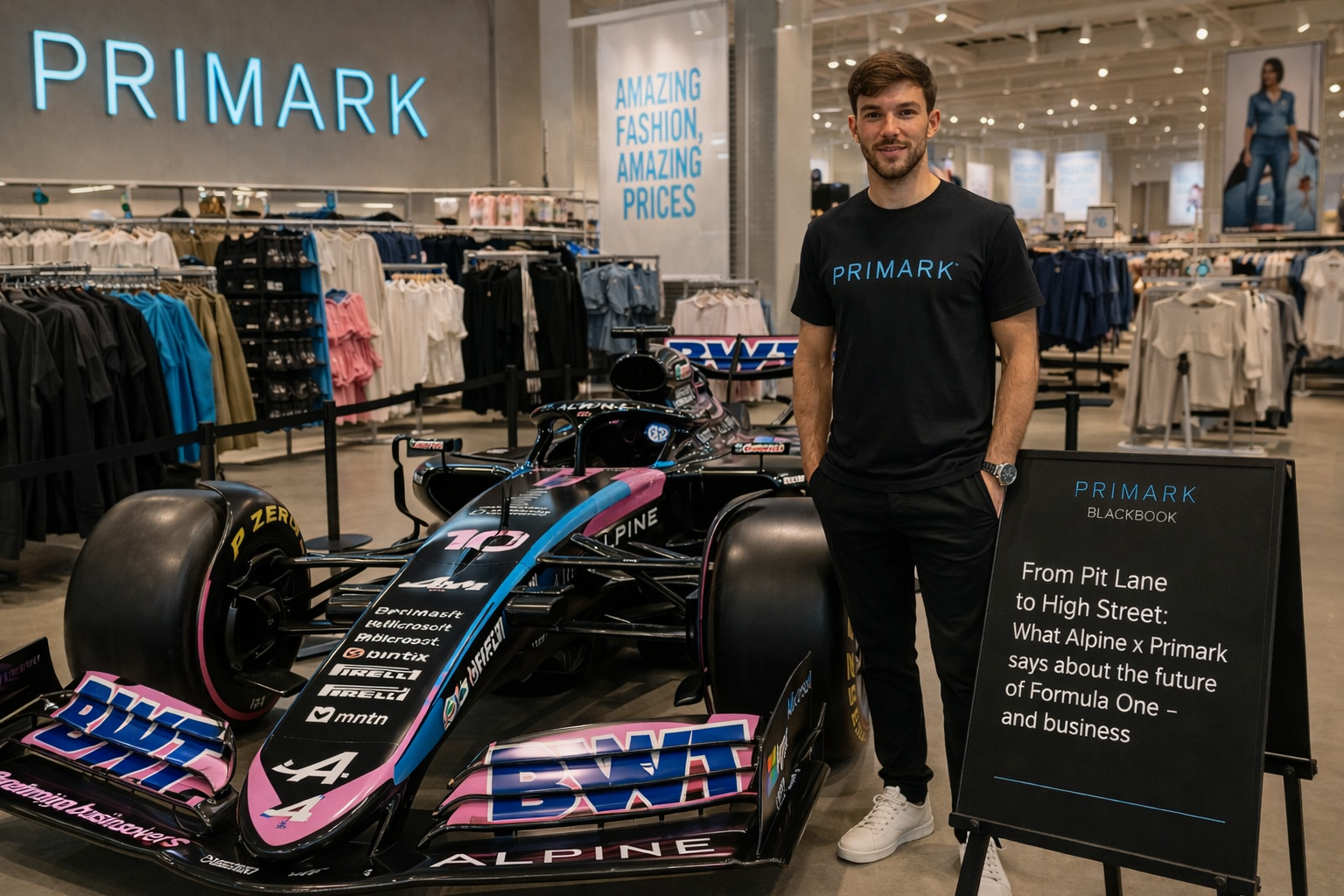
The recent move by Alpine Formula One Team to launch merchandise through Primark is more than a standard licensing deal, it’s a signal. A signal about where Formula 1 is heading, how fan behaviour is evolving, and how brands - both inside and outside motorsport - must rethink accessibility, relevance, and growth.

For decades, Formula 1 has operated within a premium ecosystem. From hospitality packages to official merchandise, the sport has cultivated an aura of exclusivity. Teamwear has typically been expensive, distributed through official stores or specialist retailers, and targeted at highly engaged fans willing to pay a premium.

Alpine’s decision to partner with a fast-fashion giant like Primark challenges that model.

This article explores the strategic upside, the potential risks, and - most importantly - the broader motorsport-to-business lessons that organisations across industries can take from this move.
For the full article and many more, subscribe to our online Knowledge Hub Motorsport To Business®+

Don't forget to use our exclusive discount code "M2BTrial" for 6 months for £1 per month*

As F1 team Alpine and high street giant Primark team up, what lessons can we take and put into our own business?

*£1 per month for 6 months, then billed at £4.99 per month thereafter. Cancel anytime

This post is for subscribers only

Already have an account? Log-in

<< All articles

From Pit Lane to High Street: What Alpine x Primark Says About the Future of F1 and Business

Introduction

The recent move by Alpine Formula One Team to launch merchandise through Primark is more than a standard licensing deal, it’s a signal. A signal about where Formula 1 is heading, how fan behaviour is evolving, and how brands - both inside and outside motorsport - must rethink accessibility, relevance, and growth.

For decades, Formula 1 has operated within a premium ecosystem. From hospitality packages to official merchandise, the sport has cultivated an aura of exclusivity. Teamwear has typically been expensive, distributed through official stores or specialist retailers, and targeted at highly engaged fans willing to pay a premium.

Alpine’s decision to partner with a fast-fashion giant like Primark challenges that model.

This article explores the strategic upside, the potential risks, and - most importantly - the broader motorsport-to-business lessons that organisations across industries can take from this move.

As F1 team Alpine and high street giant Primark team up, what lessons can we take and put into our own business?

The Strategic Context: F1’s Cultural Shift

Formula 1 is no longer just a sport - it’s a lifestyle product.

Driven by initiatives like Drive to Survive, social media expansion, and a younger, more global audience, F1 has shifted from a niche, elite motorsport into a mainstream entertainment brand. Teams are no longer just competing for podiums - they are competing for attention, relevance, and cultural share.

In this context, Alpine’s move into fast fashion makes strategic sense. It aligns with a broader industry trend: meeting fans where they already are, rather than expecting them to come to you.

The Pros: Why This Move Makes Business Sense

1. Accessibility Drives Growth

One of the clearest advantages of partnering with a retailer like Primark is accessibility.

Traditional F1 merchandise often sits at a £60 to £100+ price point for basic items like hoodies or polos. That immediately excludes a large portion of potential fans - especially younger audiences, families, and casual viewers.

By introducing products in the £10 to £25 range, Alpine dramatically lowers the barrier to entry.

This isn’t just about selling more t-shirts. It’s about expanding the fan base.

A teenager buying their first Alpine hoodie at Primark isn’t just making a purchase, they’re beginning a relationship with the brand. In marketing terms, this is customer acquisition at scale.

Business lesson: Growth often comes from widening the top of the funnel, not just maximizing value at the bottom.

2. From Niche to Mainstream Visibility

Primark operates in high-footfall, high-frequency retail environments. Millions of people walk through its stores every week - many of whom have little to no engagement with motorsport.

This creates a powerful shift in brand exposure.

Instead of Alpine existing only within the “F1 bubble,” it now sits alongside everyday fashion. That changes perception. It reframes the team from a sports entity into a lifestyle brand.

This is exactly what football clubs have done successfully over the past decade - embedding themselves into everyday culture through apparel and collaborations.

Business lesson: Distribution is branding. Where your product appears shapes how your brand is perceived.

3. Merch as a Marketing Channel, Not Just Revenue

Traditionally, merchandise has been treated as a revenue stream.

But at lower price points, the role of merch changes. It becomes a marketing tool.

A £15 t-shirt worn in public is essentially a walking advertisement. Multiply that by thousands - or millions - and you have a scalable, organic brand awareness engine.

For Alpine, the lifetime value of a newly acquired fan likely far exceeds the margin on a single garment.

Business lesson: Sometimes the ROI of a product isn’t in the sale - it’s in the exposure and long-term relationship it creates.

4. Capturing the Next Generation of Fans

Younger audiences have different expectations. They are less brand-loyal, more price-sensitive, and heavily influenced by fashion trends.

Fast fashion sits directly in that space.

By entering this channel, Alpine positions itself as accessible, current, and relevant to Gen Z and younger millennials. This is critical in a sport where long-term sustainability depends on continuously refreshing the fan base.

Business lesson: If you’re not building relevance with the next generation, you’re slowly becoming irrelevant.

5. Layered Brand Strategy

Importantly, this move doesn’t have to replace premium merchandise - it can complement it.

Alpine can maintain high-end teamwear for core fans while using Primark as an entry-level touchpoint. This creates a tiered offering:

  • Entry level: Affordable, mass-market fashion
  • Mid-tier: Official merchandise
  • Premium: Limited editions, performance gear

This is a classic segmentation strategy used across industries - from airlines to tech to fashion.

Business lesson: Smart brands don’t choose between premium and mass, they design for both.

The Cons: Risks and Trade-Offs

While the upside is clear, this strategy is not without risk.

1. Brand Dilution

Formula 1 has long been associated with prestige, performance, and exclusivity. Fast fashion, by contrast, is associated with mass production, low cost, and disposability.

There’s a potential mismatch.

If not managed carefully, Alpine risks diluting its brand equity. Fans who value the exclusivity of F1 may perceive the move as “cheapening” the brand.

Key tension: Accessibility vs. aspiration.

Business lesson: Expanding your audience should never come at the cost of losing your core identity.

2. Sustainability Concerns

Fast fashion is under increasing scrutiny for its environmental impact - short product lifecycles, high waste, and supply chain issues.

Formula 1, meanwhile, is actively pushing sustainability narratives, including its Net Zero 2030 commitments.

This creates a potential contradiction.

Consumers - especially younger ones - are increasingly values-driven. A perceived lack of alignment between brand messaging and business practices can lead to reputational risk.

Business lesson: Growth strategies must align with your broader brand values - or risk backlash.

3. Cannibalisation of Premium Sales

There is a possibility that lower-priced items could eat into sales of higher-margin official merchandise.

If a fan can buy a visually similar hoodie for £20 instead of £80, some will choose the cheaper option.

The key question is whether the increased volume and new audience offset the potential loss in premium sales.

Business lesson: When introducing lower-priced offerings, you must clearly differentiate tiers to protect margin and perception.

4. Loss of Control Over Brand Experience

Selling through third-party retailers means less control over:

  • Product presentation
  • In-store placement
  • Customer experience

In a controlled team store, every detail reinforces the brand. In a mass retail environment, Alpine becomes one product among many.

Business lesson: Scaling distribution often means sacrificing control - brands must decide where that trade-off is acceptable.

5. Overexposure Risk

Part of F1’s appeal has always been its scarcity.

If branding becomes too ubiquitous, it risks losing its sense of exclusivity and desirability.

Luxury brands carefully manage this balance. Too much visibility can erode perceived value.

Business lesson: Ubiquity can drive awareness - but too much can erode prestige.

Motorsport To Business Key Takeaways:

This move offers several broader insights that extend well beyond Formula 1.

1. Meet Customers Where They Already Are

One of the biggest shifts in modern business is the move from destination-based models to embedded experiences.

Customers no longer want to go out of their way to engage with brands. They expect brands to integrate into their existing behaviours.

Alpine going into Primark is exactly that.

Takeaway: Reduce friction. Growth often comes from convenience, not persuasion.

2. Think Ecosystem, Not Channel

Too many businesses treat channels in isolation.

The smarter approach is to think in ecosystems - how different touchpoints work together to move customers through a journey.

Primark isn’t just a retail channel - it’s an entry point into a broader Alpine ecosystem that includes:

  • Race viewership
  • Social media engagement
  • Premium merchandise
  • Live experiences

Takeaway: Every touchpoint should have a role in the customer journey.

3. Redefine What “Value” Means

In traditional models, value is often equated with price.

But in modern branding, value is multi-dimensional:

  • Emotional connection
  • Cultural relevance
  • Accessibility
  • Identity

A £15 hoodie that makes someone feel part of a community can be more valuable than an £80 one that feels out of reach.

Takeaway: Value is defined by the customer, not the price tag.

4. Use Entry-Level Products as Growth Engines

Many industries have successfully used entry-level offerings to scale:

  • Tech: Freemium models
  • Media: Free content tiers
  • Fitness: Low-cost memberships

Alpine’s move is a physical-world equivalent.

Takeaway: Entry-level doesn’t mean low-value - it means high-volume opportunity.

5. Balance Short-Term Revenue with Long-Term Brand Building

It’s easy to evaluate this move purely on merchandise sales.

But the bigger picture is brand growth.

If Alpine can convert even a small percentage of new, casual buyers into long-term fans, the return could be significant.

Takeaway: The most valuable strategies often don’t show immediate ROI.

Key Takeaways

  • Accessibility fuels growth: Lowering barriers expands your audience.
  • Distribution shapes perception: Where you sell matters as much as what you sell.
  • Merch can be marketing: Products can double as brand-building tools.
  • Balance is critical: Mass appeal must not erode premium positioning.
  • Think long-term: Fan acquisition today drives revenue tomorrow.

Final Thoughts

Alpine’s partnership with Primark is a bold, modern play in a sport that is rapidly evolving beyond its traditional boundaries.

It reflects a deeper truth: Formula 1 is no longer just competing on track - it’s competing in culture.

For businesses, the lesson is clear. Growth doesn’t always come from doing more of the same at a higher price point. Sometimes, it comes from rethinking who your audience is, where they are, and how you invite them in.

The challenge - and the opportunity - is finding the balance between exclusivity and accessibility.

Because in today’s market, the brands that win aren’t just the ones that are admired.

They’re the ones that are worn, seen, and lived.

And increasingly, that means showing up not just in premium spaces - but on the high street too.

<< All articles

From Pit Lane to High Street: What Alpine x Primark Says About the Future of F1 and Business

Introduction

The recent move by Alpine Formula One Team to launch merchandise through Primark is more than a standard licensing deal, it’s a signal. A signal about where Formula 1 is heading, how fan behaviour is evolving, and how brands - both inside and outside motorsport - must rethink accessibility, relevance, and growth.

For decades, Formula 1 has operated within a premium ecosystem. From hospitality packages to official merchandise, the sport has cultivated an aura of exclusivity. Teamwear has typically been expensive, distributed through official stores or specialist retailers, and targeted at highly engaged fans willing to pay a premium.

Alpine’s decision to partner with a fast-fashion giant like Primark challenges that model.

This article explores the strategic upside, the potential risks, and - most importantly - the broader motorsport-to-business lessons that organisations across industries can take from this move.

As F1 team Alpine and high street giant Primark team up, what lessons can we take and put into our own business?

The Strategic Context: F1’s Cultural Shift

Formula 1 is no longer just a sport - it’s a lifestyle product.

Driven by initiatives like Drive to Survive, social media expansion, and a younger, more global audience, F1 has shifted from a niche, elite motorsport into a mainstream entertainment brand. Teams are no longer just competing for podiums - they are competing for attention, relevance, and cultural share.

In this context, Alpine’s move into fast fashion makes strategic sense. It aligns with a broader industry trend: meeting fans where they already are, rather than expecting them to come to you.

The Pros: Why This Move Makes Business Sense

1. Accessibility Drives Growth

One of the clearest advantages of partnering with a retailer like Primark is accessibility.

Traditional F1 merchandise often sits at a £60 to £100+ price point for basic items like hoodies or polos. That immediately excludes a large portion of potential fans - especially younger audiences, families, and casual viewers.

By introducing products in the £10 to £25 range, Alpine dramatically lowers the barrier to entry.

This isn’t just about selling more t-shirts. It’s about expanding the fan base.

A teenager buying their first Alpine hoodie at Primark isn’t just making a purchase, they’re beginning a relationship with the brand. In marketing terms, this is customer acquisition at scale.

Business lesson: Growth often comes from widening the top of the funnel, not just maximizing value at the bottom.

2. From Niche to Mainstream Visibility

Primark operates in high-footfall, high-frequency retail environments. Millions of people walk through its stores every week - many of whom have little to no engagement with motorsport.

This creates a powerful shift in brand exposure.

Instead of Alpine existing only within the “F1 bubble,” it now sits alongside everyday fashion. That changes perception. It reframes the team from a sports entity into a lifestyle brand.

This is exactly what football clubs have done successfully over the past decade - embedding themselves into everyday culture through apparel and collaborations.

Business lesson: Distribution is branding. Where your product appears shapes how your brand is perceived.

3. Merch as a Marketing Channel, Not Just Revenue

Traditionally, merchandise has been treated as a revenue stream.

But at lower price points, the role of merch changes. It becomes a marketing tool.

A £15 t-shirt worn in public is essentially a walking advertisement. Multiply that by thousands - or millions - and you have a scalable, organic brand awareness engine.

For Alpine, the lifetime value of a newly acquired fan likely far exceeds the margin on a single garment.

Business lesson: Sometimes the ROI of a product isn’t in the sale - it’s in the exposure and long-term relationship it creates.

4. Capturing the Next Generation of Fans

Younger audiences have different expectations. They are less brand-loyal, more price-sensitive, and heavily influenced by fashion trends.

Fast fashion sits directly in that space.

By entering this channel, Alpine positions itself as accessible, current, and relevant to Gen Z and younger millennials. This is critical in a sport where long-term sustainability depends on continuously refreshing the fan base.

Business lesson: If you’re not building relevance with the next generation, you’re slowly becoming irrelevant.

5. Layered Brand Strategy

Importantly, this move doesn’t have to replace premium merchandise - it can complement it.

Alpine can maintain high-end teamwear for core fans while using Primark as an entry-level touchpoint. This creates a tiered offering:

  • Entry level: Affordable, mass-market fashion
  • Mid-tier: Official merchandise
  • Premium: Limited editions, performance gear

This is a classic segmentation strategy used across industries - from airlines to tech to fashion.

Business lesson: Smart brands don’t choose between premium and mass, they design for both.

The Cons: Risks and Trade-Offs

While the upside is clear, this strategy is not without risk.

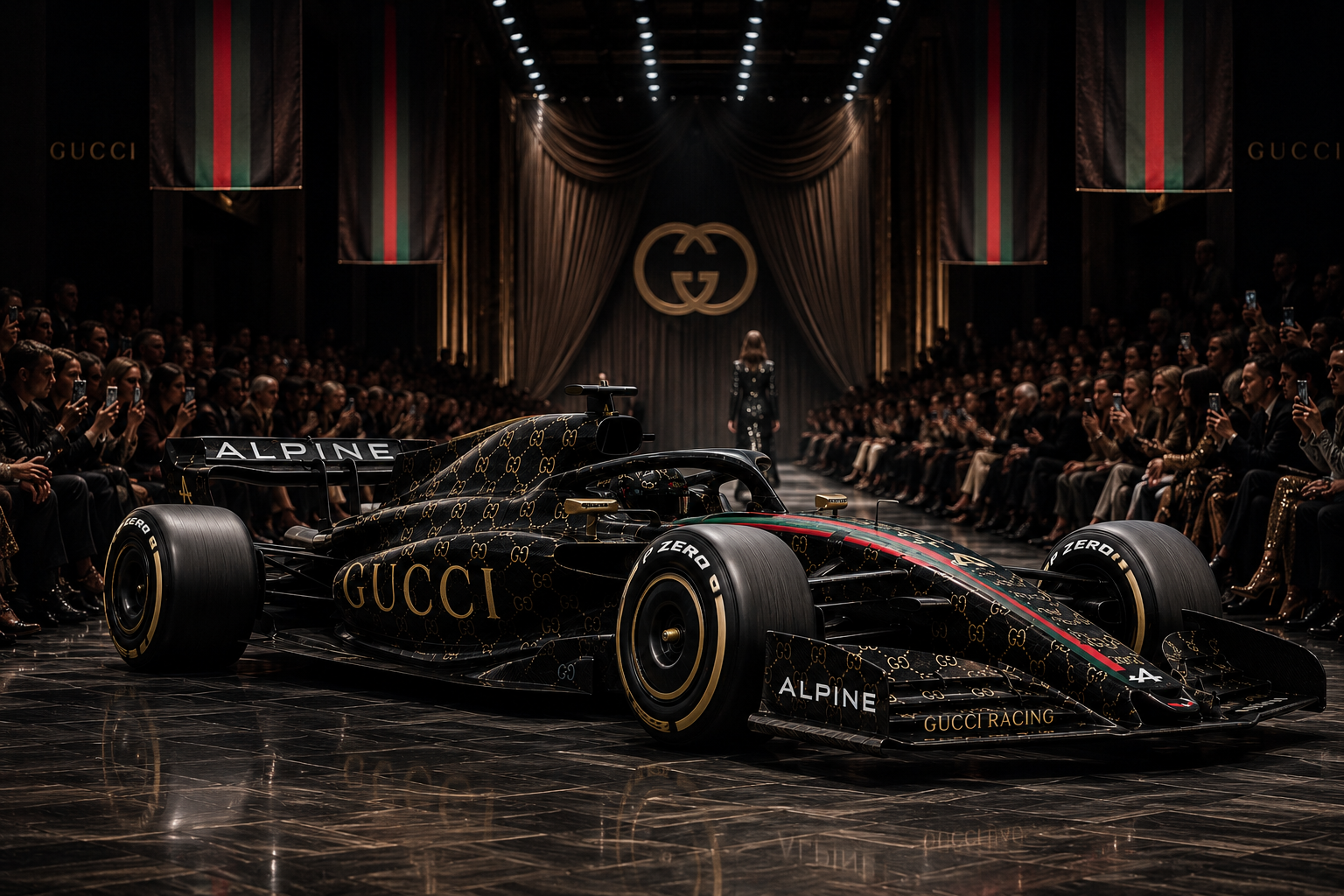
1. Brand Dilution

Formula 1 has long been associated with prestige, performance, and exclusivity. Fast fashion, by contrast, is associated with mass production, low cost, and disposability.

There’s a potential mismatch.

If not managed carefully, Alpine risks diluting its brand equity. Fans who value the exclusivity of F1 may perceive the move as “cheapening” the brand.

Key tension: Accessibility vs. aspiration.

Business lesson: Expanding your audience should never come at the cost of losing your core identity.

2. Sustainability Concerns

Fast fashion is under increasing scrutiny for its environmental impact - short product lifecycles, high waste, and supply chain issues.

Formula 1, meanwhile, is actively pushing sustainability narratives, including its Net Zero 2030 commitments.

This creates a potential contradiction.

Consumers - especially younger ones - are increasingly values-driven. A perceived lack of alignment between brand messaging and business practices can lead to reputational risk.

Business lesson: Growth strategies must align with your broader brand values - or risk backlash.

3. Cannibalisation of Premium Sales

There is a possibility that lower-priced items could eat into sales of higher-margin official merchandise.

If a fan can buy a visually similar hoodie for £20 instead of £80, some will choose the cheaper option.

The key question is whether the increased volume and new audience offset the potential loss in premium sales.

Business lesson: When introducing lower-priced offerings, you must clearly differentiate tiers to protect margin and perception.

4. Loss of Control Over Brand Experience

Selling through third-party retailers means less control over:

  • Product presentation
  • In-store placement
  • Customer experience

In a controlled team store, every detail reinforces the brand. In a mass retail environment, Alpine becomes one product among many.

Business lesson: Scaling distribution often means sacrificing control - brands must decide where that trade-off is acceptable.

5. Overexposure Risk

Part of F1’s appeal has always been its scarcity.

If branding becomes too ubiquitous, it risks losing its sense of exclusivity and desirability.

Luxury brands carefully manage this balance. Too much visibility can erode perceived value.

Business lesson: Ubiquity can drive awareness - but too much can erode prestige.

Motorsport To Business Key Takeaways:

This move offers several broader insights that extend well beyond Formula 1.

1. Meet Customers Where They Already Are

One of the biggest shifts in modern business is the move from destination-based models to embedded experiences.

Customers no longer want to go out of their way to engage with brands. They expect brands to integrate into their existing behaviours.

Alpine going into Primark is exactly that.

Takeaway: Reduce friction. Growth often comes from convenience, not persuasion.

2. Think Ecosystem, Not Channel

Too many businesses treat channels in isolation.

The smarter approach is to think in ecosystems - how different touchpoints work together to move customers through a journey.

Primark isn’t just a retail channel - it’s an entry point into a broader Alpine ecosystem that includes:

  • Race viewership
  • Social media engagement
  • Premium merchandise
  • Live experiences

Takeaway: Every touchpoint should have a role in the customer journey.

3. Redefine What “Value” Means

In traditional models, value is often equated with price.

But in modern branding, value is multi-dimensional:

  • Emotional connection
  • Cultural relevance
  • Accessibility
  • Identity

A £15 hoodie that makes someone feel part of a community can be more valuable than an £80 one that feels out of reach.

Takeaway: Value is defined by the customer, not the price tag.

4. Use Entry-Level Products as Growth Engines

Many industries have successfully used entry-level offerings to scale:

  • Tech: Freemium models
  • Media: Free content tiers
  • Fitness: Low-cost memberships

Alpine’s move is a physical-world equivalent.

Takeaway: Entry-level doesn’t mean low-value - it means high-volume opportunity.

5. Balance Short-Term Revenue with Long-Term Brand Building

It’s easy to evaluate this move purely on merchandise sales.

But the bigger picture is brand growth.

If Alpine can convert even a small percentage of new, casual buyers into long-term fans, the return could be significant.

Takeaway: The most valuable strategies often don’t show immediate ROI.

Key Takeaways

  • Accessibility fuels growth: Lowering barriers expands your audience.
  • Distribution shapes perception: Where you sell matters as much as what you sell.
  • Merch can be marketing: Products can double as brand-building tools.
  • Balance is critical: Mass appeal must not erode premium positioning.
  • Think long-term: Fan acquisition today drives revenue tomorrow.

Final Thoughts

Alpine’s partnership with Primark is a bold, modern play in a sport that is rapidly evolving beyond its traditional boundaries.

It reflects a deeper truth: Formula 1 is no longer just competing on track - it’s competing in culture.

For businesses, the lesson is clear. Growth doesn’t always come from doing more of the same at a higher price point. Sometimes, it comes from rethinking who your audience is, where they are, and how you invite them in.

The challenge - and the opportunity - is finding the balance between exclusivity and accessibility.

Because in today’s market, the brands that win aren’t just the ones that are admired.

They’re the ones that are worn, seen, and lived.

And increasingly, that means showing up not just in premium spaces - but on the high street too.