Log out
<< All articles

Motorsport Franchising vs Full Ownership: What Businesses Can Learn from the Grid

Introduction

In modern motorsport, success is no longer defined purely by engineering excellence or driver talent. Increasingly, it is shaped by business structure - specifically, how teams choose to commercialise their assets, brands, and intellectual property.

One of the most interesting dynamics is the contrast between franchising models -where a team supplies cars, engines, or branding to a partner - and full ownership models, where a team retains complete control over its operations, identity, and commercial direction.

From Formula 1 to the British Touring Car Championship (BTCC), these approaches offer valuable lessons for any organisation considering growth, partnerships, or brand expansion.
For the full article and many more, subscribe to our online Knowledge Hub Motorsport To Business®+

Don't forget to use our exclusive discount code "M2BTrial" for 6 months for £1 per month*

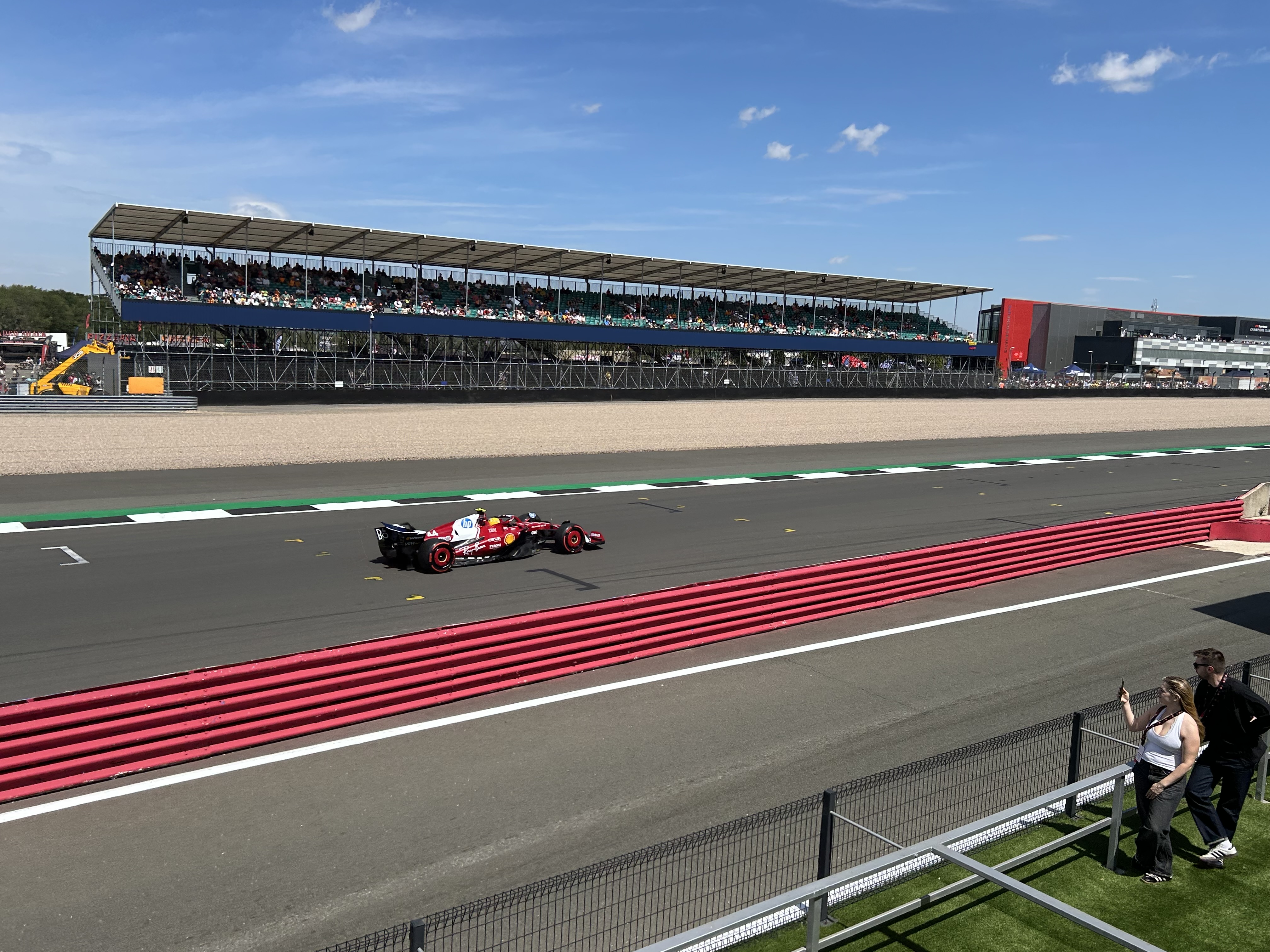
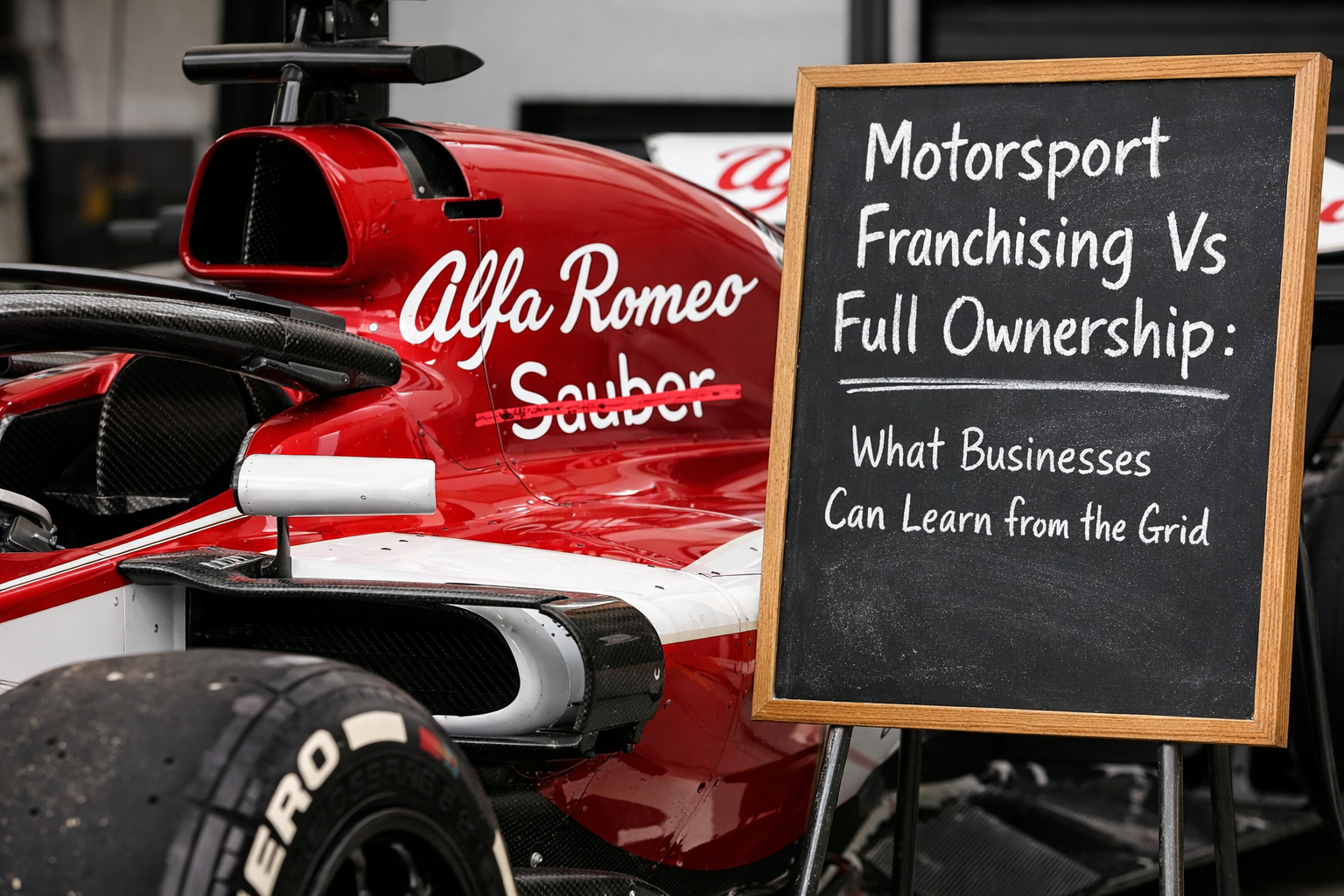
From 2018 to 2023 Alfa Romeo ran in Formula One, but in reality did they?!

*£1 per month for 6 months, then billed at £4.99 per month thereafter. Cancel anytime

This post is for subscribers only

Already have an account? Log-in

<< All articles

Motorsport Franchising vs Full Ownership: What Businesses Can Learn from the Grid

Introduction

In modern motorsport, success is no longer defined purely by engineering excellence or driver talent. Increasingly, it is shaped by business structure - specifically, how teams choose to commercialise their assets, brands, and intellectual property.

One of the most interesting dynamics is the contrast between franchising models -where a team supplies cars, engines, or branding to a partner - and full ownership models, where a team retains complete control over its operations, identity, and commercial direction.

From Formula 1 to the British Touring Car Championship (BTCC), these approaches offer valuable lessons for any organisation considering growth, partnerships, or brand expansion.

From 2018 to 2023 Alfa Romeo ran in Formula One, but in reality did they?!

Understanding the Two Models

1. Franchising/Partnered Model

In motorsport, “franchising” typically involves a team providing:

  • Technical infrastructure (cars, engines, IP)
  • Operational support
  • Brand alignment or naming rights

In return, the partner contributes:

  • Funding
  • Sponsorship access
  • Market reach
  • Commercial positioning

This is not franchising in the traditional retail sense, but rather a hybrid partnership model combining engineering and brand licensing.

2. Full Ownership Model

Under full ownership, a team:

  • Controls its brand identity
  • Funds its own operations (via sponsors, investors, or parent company)
  • Retains all intellectual property and decision-making authority

This model prioritises control and long-term value creation but comes with higher financial exposure.

Case Study 1:

Sauber F1 Team – Alfa Romeo, Stake, and Audi

Few teams illustrate the evolution of motorsport business models better than Sauber.

The Alfa Romeo Era

Between 2018 and 2023, Sauber operated under the Alfa Romeo name via a partnership with Alfa Romeo.

Importantly:

  • Alfa Romeo did not own the team
  • Sauber retained operational control
  • The deal was largely branding and sponsorship-driven

Benefits:

  • Immediate brand elevation
  • Increased sponsorship value
  • Financial stability without selling equity

Challenges:

  • Limited long-term brand equity for Sauber itself
  • Dependency on partner continuation

Transition to Stake F1

Following Alfa Romeo’s exit, Sauber partnered with Stake in the 2024 and 2025 as title sponsor.

This highlighted a key feature of franchising-style models:

  • Flexibility – partners can change relatively quickly
  • Continuity of core operations – Sauber remained intact

However, it also underscored:

  • Potential brand inconsistency
  • Reliance on external industries (in this case, gambling sponsorship)

Audi Acquisition

In the background though the truth was German Manufacturer Audi had purchased the team which marked a shift to a full ownership model.

Audi’s approach:

  • Acquire equity
  • Integrate power unit development
  • Align the team with long-term OEM strategy

Key Shift:

From commercial partnership → strategic ownership

Business Insight

  • Franchising works well for short- to medium-term growth and stability
  • Full ownership is essential for long-term brand value and strategic control

Case Study 2:

Red Bull Powertrains and Ford

Following Honda’s withdrawal, Red Bull created its own engine division: Red Bull Powertrains.

Rather than going fully independent, they partnered with Ford Motor Company.

Structure of the Partnership

  • Red Bull retains operational control
  • Ford contributes:
    • Technical expertise (particularly in electrification)
    • Brand credibility
    • Commercial leverage

This is a modern hybrid model:

  • Not pure franchising
  • Not full ownership
  • A strategic co-development partnership

Advantages

  • Risk sharing in a high-cost environment
  • Access to external expertise
  • Enhanced global brand reach

Risks

  • Potential misalignment of objectives
  • Shared control over key technology decisions

Business Insight

This model reflects a growing trend:

Collaborate where necessary, control where it matters.

For businesses, this means:

  • Partnering in areas of weakness
  • Retaining ownership of core competencies

Case Study 3:

West Surrey Racing & MB Motorsport

In the BTCC, West Surrey Racing (WSR) has long operated as a leading independent team, running BMW machinery.

Its partnership with MB Motorsport from 2022-25 provided a clear franchising-style model.

How It Works

  • WSR supplies:
    • Cars
    • Engineering
    • Race operations

  • MB Motorsport contributes:
    • Sponsorship acquisition
    • Brand storytelling
    • Commercial strategy

Benefits

  • WSR monetises its technical platform
  • MB Motorsport accesses elite-level racing without building infrastructure

Challenges

  • Shared brand identity
  • Dependence on continued alignment of objectives

Business Insight

This model demonstrates:

  • How core capability (engineering) can be productised
  • How commercial partners can scale reach without heavy capital investment

Case Study 4:

Excelr8 & Vertu Motors

Excelr8’s partnership with Vertu Motors is another example of brand integration within a team structure.

Key Features

  • Vertu Motors acts as a title partner & team name
  • The team benefits from:
    • Financial backing
    • Retail network exposure

  • Vertu gains:
    • Brand visibility
    • Experiential marketing platform

Benefits

  • Strong alignment between automotive retail and racing
  • Scalable commercial model

Risks

  • Brand dependency
  • Potential vulnerability if the partner exits

Business Insight

This model highlights:

  • The value of industry-aligned partnerships
  • The importance of shared audiences and objectives

Franchising vs Full Ownership: Pros and Cons

Franchising / Partnered Model

Pros:

  • Lower financial risk
  • Faster scaling opportunities
  • Access to external expertise and networks
  • Flexibility to change partners

Cons:

  • Reduced control
  • Brand dilution risk
  • Dependency on partner stability
  • Limited long-term equity building

Full Ownership Model

Pros:

  • Complete strategic control
  • Strong, consistent brand identity
  • Long-term value creation
  • Greater independence

Cons:

  • High capital requirements
  • Increased risk exposure
  • Slower scaling without partnerships

Key Lessons for Business Growth

Motorsport provides a powerful lens through which to examine business strategy.

1. Monetise Your Core Strengths

Teams like WSR demonstrate that:

Your internal capability can become a sellable product

Ask:

  • What do we do exceptionally well?
  • Can others pay to access it?

2. Partnerships Are Accelerators - Not Foundations

Sauber’s journey with Alfa Romeo and Stake showed that partnerships:

  • Can stabilise and grow a business
  • But should not replace long-term strategy

Lesson:

Use partnerships to accelerate growth, not define identity.

3. Brand Ownership Matters

The transition from Alfa Romeo branding to Audi ownership highlights:

  • The difference between renting a brand and owning one

Lesson:

If long-term brand equity is the goal, ownership is critical.

4. Hybrid Models Are the Future

Red Bull Powertrains and Ford illustrate a key shift:

  • Businesses no longer choose between control or collaboration
  • They design models that combine both

Lesson:

Be flexible in structuring partnerships:

  • Own your core
  • Share the rest

5. Alignment Is Everything

Across all examples, one factor determines success:

Alignment of goals, values, and timelines

Misalignment leads to:

  • Brand confusion
  • Operational friction
  • Partnership breakdown

Is This Model Workable in Business?

Absolutely - but with nuance.

When Franchising Works Best

  • When scaling quickly is a priority
  • When capital is limited
  • When entering new markets
  • When complementary expertise is required

Examples outside motorsport:

  • Licensing agreements
  • White-label products
  • Strategic brand partnerships

When Full Ownership Is Better

  • When brand equity is the primary asset
  • When differentiation is critical
  • When long-term control outweighs short-term growth

The Hybrid Approach

For many modern businesses, the optimal strategy is:

Build a strong core, then selectively franchise or partner around it

This mirrors:

  • Red Bull Powertrains’ technical control
  • Ford’s complementary contribution

Final Thoughts

Motorsport is often seen as a technological arms race, but beneath the surface, it is equally a laboratory for business strategy.

The contrast between franchising and full ownership is not about choosing one over the other - it is about understanding:

  • What you want to control
  • What you are willing to share
  • And how each decision shapes your long-term value

From Sauber F1 Team’s evolving partnerships to Red Bull Powertrains’ hybrid model, the lesson is clear:

The most successful organisations are not rigid in structure, they are deliberate in design.

For businesses looking to grow, the question is not:

“Should we franchise or own everything?”

But rather:

“Where does partnership create advantage and where does ownership create value?”

<< All articles

Motorsport Franchising vs Full Ownership: What Businesses Can Learn from the Grid

Introduction

In modern motorsport, success is no longer defined purely by engineering excellence or driver talent. Increasingly, it is shaped by business structure - specifically, how teams choose to commercialise their assets, brands, and intellectual property.

One of the most interesting dynamics is the contrast between franchising models -where a team supplies cars, engines, or branding to a partner - and full ownership models, where a team retains complete control over its operations, identity, and commercial direction.

From Formula 1 to the British Touring Car Championship (BTCC), these approaches offer valuable lessons for any organisation considering growth, partnerships, or brand expansion.

From 2018 to 2023 Alfa Romeo ran in Formula One, but in reality did they?!

Understanding the Two Models

1. Franchising/Partnered Model

In motorsport, “franchising” typically involves a team providing:

  • Technical infrastructure (cars, engines, IP)
  • Operational support
  • Brand alignment or naming rights

In return, the partner contributes:

  • Funding
  • Sponsorship access
  • Market reach
  • Commercial positioning

This is not franchising in the traditional retail sense, but rather a hybrid partnership model combining engineering and brand licensing.

2. Full Ownership Model

Under full ownership, a team:

  • Controls its brand identity
  • Funds its own operations (via sponsors, investors, or parent company)
  • Retains all intellectual property and decision-making authority

This model prioritises control and long-term value creation but comes with higher financial exposure.

Case Study 1:

Sauber F1 Team – Alfa Romeo, Stake, and Audi

Few teams illustrate the evolution of motorsport business models better than Sauber.

The Alfa Romeo Era

Between 2018 and 2023, Sauber operated under the Alfa Romeo name via a partnership with Alfa Romeo.

Importantly:

  • Alfa Romeo did not own the team
  • Sauber retained operational control
  • The deal was largely branding and sponsorship-driven

Benefits:

  • Immediate brand elevation
  • Increased sponsorship value
  • Financial stability without selling equity

Challenges:

  • Limited long-term brand equity for Sauber itself
  • Dependency on partner continuation

Transition to Stake F1

Following Alfa Romeo’s exit, Sauber partnered with Stake in the 2024 and 2025 as title sponsor.

This highlighted a key feature of franchising-style models:

  • Flexibility – partners can change relatively quickly
  • Continuity of core operations – Sauber remained intact

However, it also underscored:

  • Potential brand inconsistency
  • Reliance on external industries (in this case, gambling sponsorship)

Audi Acquisition

In the background though the truth was German Manufacturer Audi had purchased the team which marked a shift to a full ownership model.

Audi’s approach:

  • Acquire equity
  • Integrate power unit development
  • Align the team with long-term OEM strategy

Key Shift:

From commercial partnership → strategic ownership

Business Insight

  • Franchising works well for short- to medium-term growth and stability
  • Full ownership is essential for long-term brand value and strategic control

Case Study 2:

Red Bull Powertrains and Ford

Following Honda’s withdrawal, Red Bull created its own engine division: Red Bull Powertrains.

Rather than going fully independent, they partnered with Ford Motor Company.

Structure of the Partnership

  • Red Bull retains operational control
  • Ford contributes:
    • Technical expertise (particularly in electrification)
    • Brand credibility
    • Commercial leverage

This is a modern hybrid model:

  • Not pure franchising
  • Not full ownership
  • A strategic co-development partnership

Advantages

  • Risk sharing in a high-cost environment
  • Access to external expertise
  • Enhanced global brand reach

Risks

  • Potential misalignment of objectives
  • Shared control over key technology decisions

Business Insight

This model reflects a growing trend:

Collaborate where necessary, control where it matters.

For businesses, this means:

  • Partnering in areas of weakness
  • Retaining ownership of core competencies

Case Study 3:

West Surrey Racing & MB Motorsport

In the BTCC, West Surrey Racing (WSR) has long operated as a leading independent team, running BMW machinery.

Its partnership with MB Motorsport from 2022-25 provided a clear franchising-style model.

How It Works

  • WSR supplies:
    • Cars
    • Engineering
    • Race operations

  • MB Motorsport contributes:
    • Sponsorship acquisition
    • Brand storytelling
    • Commercial strategy

Benefits

  • WSR monetises its technical platform
  • MB Motorsport accesses elite-level racing without building infrastructure

Challenges

  • Shared brand identity
  • Dependence on continued alignment of objectives

Business Insight

This model demonstrates:

  • How core capability (engineering) can be productised
  • How commercial partners can scale reach without heavy capital investment

Case Study 4:

Excelr8 & Vertu Motors

Excelr8’s partnership with Vertu Motors is another example of brand integration within a team structure.

Key Features

  • Vertu Motors acts as a title partner & team name
  • The team benefits from:
    • Financial backing
    • Retail network exposure

  • Vertu gains:
    • Brand visibility
    • Experiential marketing platform

Benefits

  • Strong alignment between automotive retail and racing
  • Scalable commercial model

Risks

  • Brand dependency
  • Potential vulnerability if the partner exits

Business Insight

This model highlights:

  • The value of industry-aligned partnerships
  • The importance of shared audiences and objectives

Franchising vs Full Ownership: Pros and Cons

Franchising / Partnered Model

Pros:

  • Lower financial risk
  • Faster scaling opportunities
  • Access to external expertise and networks
  • Flexibility to change partners

Cons:

  • Reduced control
  • Brand dilution risk
  • Dependency on partner stability
  • Limited long-term equity building

Full Ownership Model

Pros:

  • Complete strategic control
  • Strong, consistent brand identity
  • Long-term value creation
  • Greater independence

Cons:

  • High capital requirements
  • Increased risk exposure
  • Slower scaling without partnerships

Key Lessons for Business Growth

Motorsport provides a powerful lens through which to examine business strategy.

1. Monetise Your Core Strengths

Teams like WSR demonstrate that:

Your internal capability can become a sellable product

Ask:

  • What do we do exceptionally well?
  • Can others pay to access it?

2. Partnerships Are Accelerators - Not Foundations

Sauber’s journey with Alfa Romeo and Stake showed that partnerships:

  • Can stabilise and grow a business
  • But should not replace long-term strategy

Lesson:

Use partnerships to accelerate growth, not define identity.

3. Brand Ownership Matters

The transition from Alfa Romeo branding to Audi ownership highlights:

  • The difference between renting a brand and owning one

Lesson:

If long-term brand equity is the goal, ownership is critical.

4. Hybrid Models Are the Future

Red Bull Powertrains and Ford illustrate a key shift:

  • Businesses no longer choose between control or collaboration
  • They design models that combine both

Lesson:

Be flexible in structuring partnerships:

  • Own your core
  • Share the rest

5. Alignment Is Everything

Across all examples, one factor determines success:

Alignment of goals, values, and timelines

Misalignment leads to:

  • Brand confusion
  • Operational friction
  • Partnership breakdown

Is This Model Workable in Business?

Absolutely - but with nuance.

When Franchising Works Best

  • When scaling quickly is a priority
  • When capital is limited
  • When entering new markets
  • When complementary expertise is required

Examples outside motorsport:

  • Licensing agreements
  • White-label products
  • Strategic brand partnerships

When Full Ownership Is Better

  • When brand equity is the primary asset
  • When differentiation is critical
  • When long-term control outweighs short-term growth

The Hybrid Approach

For many modern businesses, the optimal strategy is:

Build a strong core, then selectively franchise or partner around it

This mirrors:

  • Red Bull Powertrains’ technical control
  • Ford’s complementary contribution

Final Thoughts

Motorsport is often seen as a technological arms race, but beneath the surface, it is equally a laboratory for business strategy.

The contrast between franchising and full ownership is not about choosing one over the other - it is about understanding:

  • What you want to control
  • What you are willing to share
  • And how each decision shapes your long-term value

From Sauber F1 Team’s evolving partnerships to Red Bull Powertrains’ hybrid model, the lesson is clear:

The most successful organisations are not rigid in structure, they are deliberate in design.

For businesses looking to grow, the question is not:

“Should we franchise or own everything?”

But rather:

“Where does partnership create advantage and where does ownership create value?”