

Watch on Sunday, Learn on Monday - Italian GP: What Ferrari Can Teach Us About Rules of Engagement
Two brilliant people. One team. One objective.
So how do you make sure they actually work together?
That was one of the fascinating questions to emerge from Sunday's Italian Grand Prix at Monza.
On the opening lap, Ferrari team-mates Lewis Hamilton and Charles Leclerc found themselves fighting each other.
Hamilton attacked Leclerc into the first chicane. The two made contact and, moments later, Hamilton was forced onto the gravel as the battle continued.
Afterwards, Hamilton made an interesting observation about how Ferrari manages its two drivers:
“There are no rules here.”
Ferrari Team Principal Fred Vasseur subsequently suggested the team would discuss the incident, while Hamilton's argument was that some clearer guidelines might be required about how the pair race each other.
On the surface, it's a Formula One story about two racing drivers.
But underneath it sits a very familiar business problem.
Because putting talented people together doesn't automatically create a high-performing team.
Sometimes it simply creates competition.
And that's where Rules of Engagement become important.
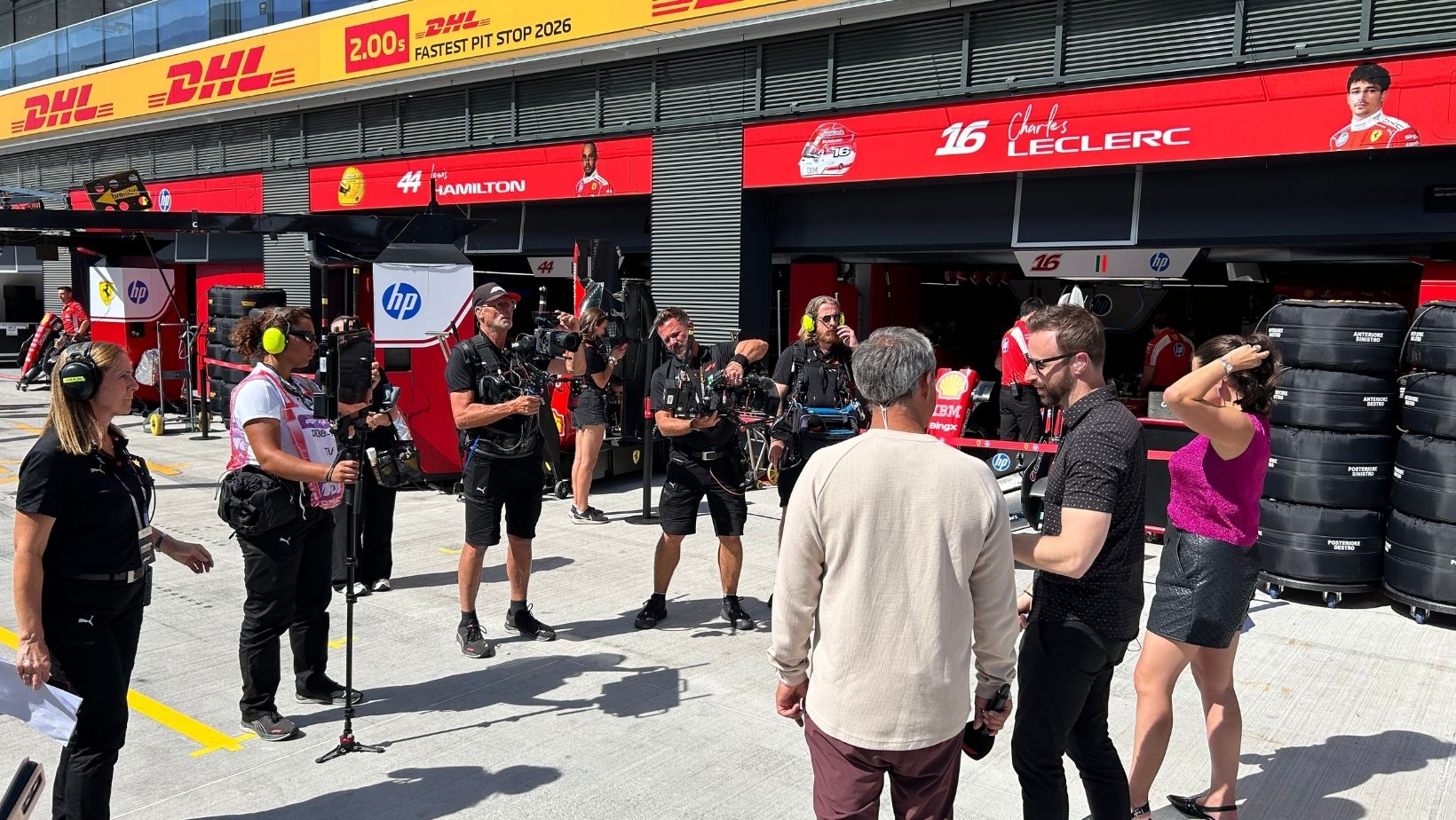
When individual ambition meets collective performance
Hamilton and Leclerc are in an unusual position.
They are team-mates.
But they're also competitors.
They wear the same uniform.
Drive cars built by the same organisation.
Share engineers, data and resources.
And ultimately contribute towards Ferrari's Constructors' Championship performance.
But each also wants to beat the other.
That's not necessarily a bad thing.
In fact, competition between high performers can raise standards.
The problem comes when individual ambition begins to compromise the collective objective.
Businesses experience exactly the same tension.
Think about two salespeople chasing the same client.
Two departments competing for the same budget.
Two senior executives wanting the same promotion.
Sales promising something Operations has to deliver.
Marketing generating demand that the rest of the organisation isn't ready to service.
Or two business units whose individual targets inadvertently encourage them to work against each other.
Everyone can be performing against their own objectives while the organisation performs worse as a result.
That's why high-performing teams need something beyond job descriptions and KPIs.
They need Rules of Engagement.
What are our Rules of Engagement?
Rules of Engagement don't have to mean a huge policy document.
They are simply an agreed understanding of:
How are we going to work together?
What happens when our priorities conflict?
When do I make the decision myself?
When do I involve you?
When do we escalate?
What information do we share?
What behaviours are acceptable when we disagree?
And perhaps most importantly:
What takes priority when my individual objective conflicts with the team's?
If everyone knows those answers before the pressure arrives, decisions become much easier when it does.
If nobody knows them, people make their own interpretation.
That's when friction begins.
Agree the rules before Turn One
There's an important point here.
The worst time to decide your Rules of Engagement is during the disagreement.
Imagine Hamilton and Leclerc approaching Turn One at Monza at around 200mph.
That's not the moment for Ferrari to begin deciding what constitutes acceptable racing between its drivers.
The same principle applies in business.
Don't wait until Sales and Operations are arguing about an impossible customer commitment to decide who has authority over delivery.
Don't wait until two directors disagree over a major investment to establish who makes the final call.
Don't wait until a project is failing to determine when problems should be escalated.
And don't wait until two high performers are competing for the same opportunity to decide how that competition should work.
Agree the rules while everyone is calm.
Because when the pressure arrives, people fall back on whatever understanding already exists.
And if there isn't one, they'll create their own.
Rules aren't there to remove competition
There's an important distinction.
Rules of Engagement shouldn't remove healthy competition.
Nobody wants Ferrari telling Hamilton and Leclerc that they aren't allowed to race each other.
Competition can make both drivers better.
The challenge is establishing the boundaries.
Race hard – but don't take each other out.
The business equivalent might be:
Challenge each other's ideas – but not each other's integrity.
Compete for business – but don't undermine another team.
Move quickly – but don't make commitments somebody else has to deliver without involving them.
Disagree in the meeting – but support the decision once it has been made.
Escalate problems – but don't use escalation as a political weapon.
Great Rules of Engagement don't restrict high performers.
They give them freedom within understood boundaries.
Clarity creates speed
Interestingly, Hamilton's frustration with Ferrari didn't begin at Monza.
At the previous race in Zandvoort, he had been unhappy about how long Ferrari took to manage the positions of its two cars while Hamilton was running on fresher tyres.
Hamilton subsequently compared the situation with Mercedes, observing how quickly his former team could make and execute similar decisions.
That gives us another important business lesson.
Clarity creates speed.
When everybody understands the rules, fewer decisions need lengthy discussion.
People know their authority.
They know when to act.
They know when to defer.
They know what the organisation is trying to achieve.
And they trust that everybody else is operating from the same playbook.
Without that clarity, even relatively straightforward decisions become negotiations.
But there's another side to this
Rules of Engagement cannot become an excuse for leaders to control everything.
Ferrari could theoretically create a rule for every possible situation between Hamilton and Leclerc.
But Formula One is unpredictable.
No rulebook could anticipate every scenario.
Business is the same.
If your Rules of Engagement require people to refer constantly upwards for permission, you've probably created bureaucracy rather than clarity.
The objective should be to establish principles and boundaries, then trust good people to operate within them.
That might mean:
Customer first.
Challenge openly, commit collectively.
Never surprise another team with something that materially affects them.
Solve disagreements at the lowest possible level.
Escalate issues early rather than hiding them.
Team performance comes before individual recognition.
Those principles allow people to make their own decisions without having to predict exactly what the CEO would do.
Psychological safety matters too
There's another ingredient.
Rules only work if people feel able to use them.
If somebody believes a colleague is crossing an agreed boundary, can they say so?
Can a junior employee challenge a senior one?
Can someone say:
“That's not what we agreed.”
Can people disagree without the relationship becoming personal?
High-performing teams aren't teams where everybody agrees.
They're environments where people can disagree constructively, resolve the issue and continue working together.
Hamilton and Leclerc will almost certainly disagree again.
Ferrari's challenge isn't preventing that.
It's ensuring they know how they're going to handle it when they do.
And that is exactly the challenge facing leadership teams.
The Monday Morning Lesson
Perhaps there is a useful exercise for leadership teams this Monday.
Forget the strategy document for half an hour.
Ask everyone around the table:
“What are our Rules of Engagement?”
Then see whether everybody gives roughly the same answer.
You could start with five questions:
- How do we make decisions when we disagree?
- What happens when individual or departmental objectives conflict with the wider business?
- What decisions can people make without asking permission?
- When and how should an issue be escalated?
- What behaviours do we expect from each other when we're under pressure?
If five senior leaders give you five completely different answers, you may have discovered something important.
Because most teams don't find out that their Rules of Engagement are unclear when everything is going well.
They discover it at Turn One.
Ferrari has two of the most talented racing drivers in the world.
But talent alone doesn't create teamwork.
Neither does putting the same logo on everyone's shirt.
High-performing teams understand how they will work together, where the boundaries sit, how they will handle disagreement and what happens when individual ambition collides with collective success.
Because you don't create great teamwork by eliminating tension.
You create it by agreeing how you'll deal with the tension when it inevitably arrives.
Watch on Sunday. Learn on Monday.
Motorsport To Business – translating lessons from elite motorsport into better business performance.

















.jpeg)



























.png)
.png)
.png)
.png)