

Harry Benjamin - Bahrain GP Preview: The Calendar Says One Thing. We’re Preparing for Another
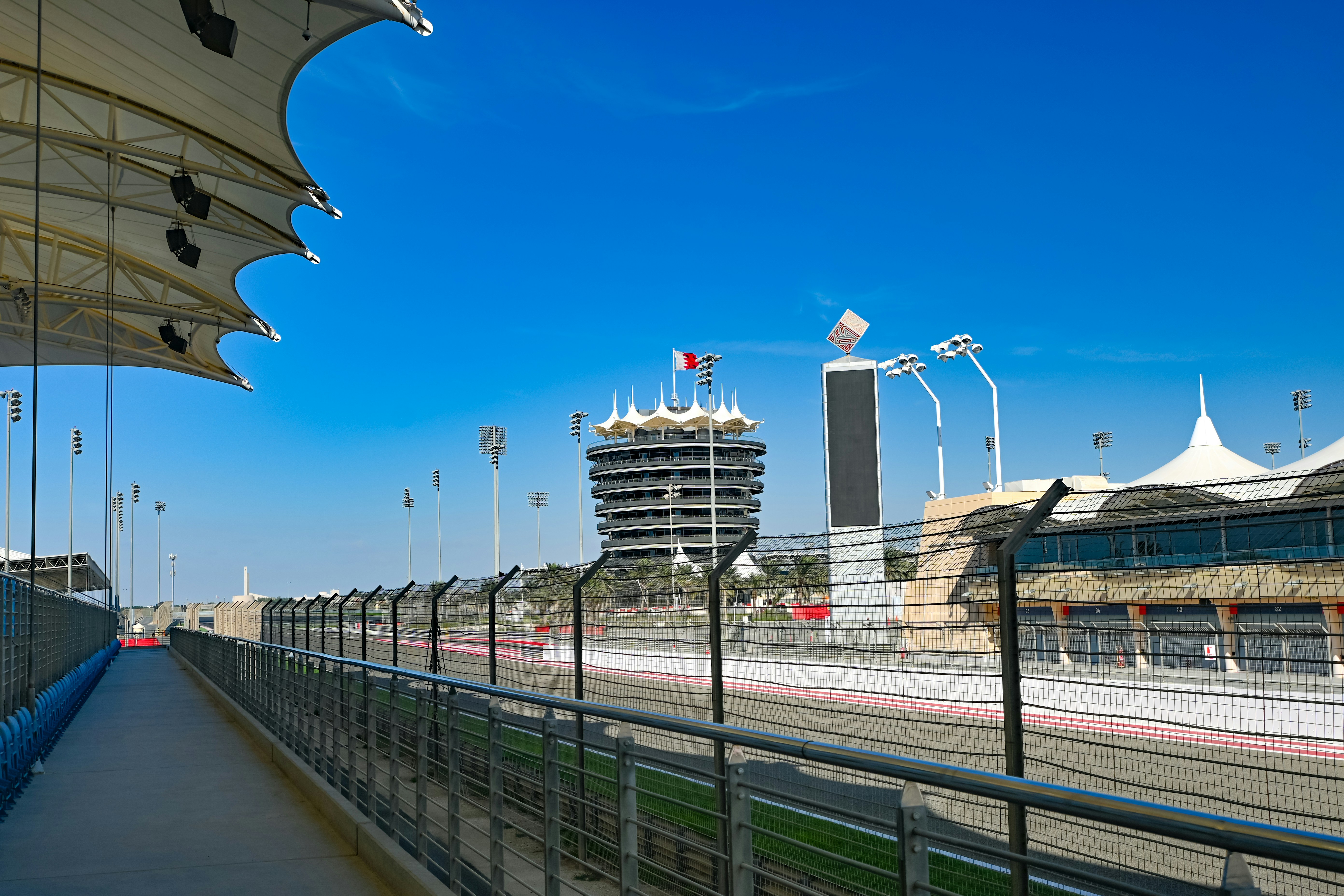
At the start of this Formula 1 season, my diary said Bahrain in April. This week, I’m preparing for the Bahrain Grand Prix in Malaysia, which probably tells you something about how useful a Formula 1 calendar has been this year.
The original race in Bahrain couldn’t take place, so Formula 1 found another solution. Sepang, which hasn’t hosted an F1 race since 2017, suddenly reappeared on the schedule and this weekend will host the rather unusually titled Bahrain Grand Prix in Malaysia.
For everyone involved, that means adapting quickly. Flights change, hotels change, freight changes and broadcasters change their plans. For those of us commentating, a circuit we weren’t expecting to cover this year suddenly requires all the usual preparation: learning what has changed since F1 was last there, understanding how the current generation of cars might behave and working out which bits of old information are still useful.
But Malaysia is not actually the most interesting example of the uncertainty around this season.

Further down the calendar, Qatar and Abu Dhabi are still scheduled as the final two races of 2026. That remains the official plan, yet at the same time Imola has reportedly been told to prepare as a possible alternative if circumstances change.
That means a circuit in Italy is having to make real preparations for an event that, as things currently stand, it may never host. Temporary infrastructure has to be considered, people need to be available, logistics need working through and money has to be committed before anybody knows whether any of it will actually be required.
On the surface, that can seem inefficient. Why spend time and money preparing for something you hope does not happen?
The answer is that by the time you know for certain that Plan A has failed, it may already be too late to create a credible Plan B.
We often talk about contingency plans as though they are documents sitting quietly in a drawer, waiting to be opened in an emergency. In reality, a useful alternative usually needs work long before the emergency arrives. You cannot cancel a Formula 1 race and only then start asking whether another circuit has the infrastructure, personnel and organisation required to replace it.
The alternative has to become plausible before you know whether you will need it, and inevitably that means accepting that some preparation may never be used.
I think there is something useful in that beyond motorsport, because modern working life places enormous emphasis on efficiency. We want budgets spent on things that definitely happen, people focused on projects that definitely launch and time devoted to work with a measurable return.
Contingency planning sits slightly awkwardly alongside that mindset because its value can be difficult to see when everything goes well.
A backup supplier that is never needed can look like an unnecessary expense. Training somebody to cover another person’s role can seem like time that could have been spent elsewhere. A spare system may sit unused for years.
Yet the fact that something was never needed does not necessarily mean preparing it was a mistake. Sometimes what you are paying for is not the outcome itself, but the ability to choose another outcome if circumstances force you to.
That is the particularly interesting part of the situation Formula 1 finds itself in now. The sport has an official calendar and has to continue preparing on that basis, while simultaneously acknowledging that events outside its control could force a different ending to the season.
Those two ideas are not contradictory. You can believe Plan A will happen while still taking Plan B seriously.
For those of us working around the championship, that uncertainty filters down in smaller ways. You prepare what you can, avoid making assumptions that do not need to be made yet and keep enough flexibility in the diary to respond when there is finally a decision.
There is obviously a limit to this. Nobody can prepare equally for every conceivable outcome, and attempting to do so would probably create more problems than it solved. But there is also a danger in treating uncertainty as a reason to do nothing until certainty arrives.
Sometimes good planning is not about predicting exactly what will happen. It is about deciding which possibilities matter enough that you need to remain ready for them.
If Qatar and Abu Dhabi go ahead as planned, some of the work being done elsewhere may never be used. That does not necessarily make it a wasted effort. Its value lies in the fact that, if circumstances do change, Formula 1 will have somewhere else to turn.
Perhaps that is the more useful way to think about contingency planning. Not as an admission that you expect the original plan to fail, but as a way of making sure one unexpected change does not leave you with no plan at all.










.jpeg)



















.png)
.png)
.png)
.png)