
What Max Verstappen and Carlos Sainz can teach business about retaining major talent through a long-term transformation
How Do You Keep Your Best People When the Results Aren’t There Yet?
In business, attracting great people when everything is going well is relatively easy.
The company is growing. Results are strong. Investment is flowing. People want to be associated with the success.
The more difficult test of leadership is persuading exceptional people to stay when the results aren't there yet.
Formula One has just given us two fascinating examples.
Within the space of 24 hours, Carlos Sainz committed his long-term future to Williams and Max Verstappen extended his relationship with Red Bull Racing until at least the end of 2030.
On the surface, neither decision is entirely obvious.
Williams entered 2026 with considerable optimism after finishing fifth in the Constructors' Championship in 2025. But the new regulations have not delivered the step forward they hoped for. After the opening 11 rounds, they had scored just 11 points and sat third from bottom in the championship.
Red Bull's situation is different, but the principle is similar.
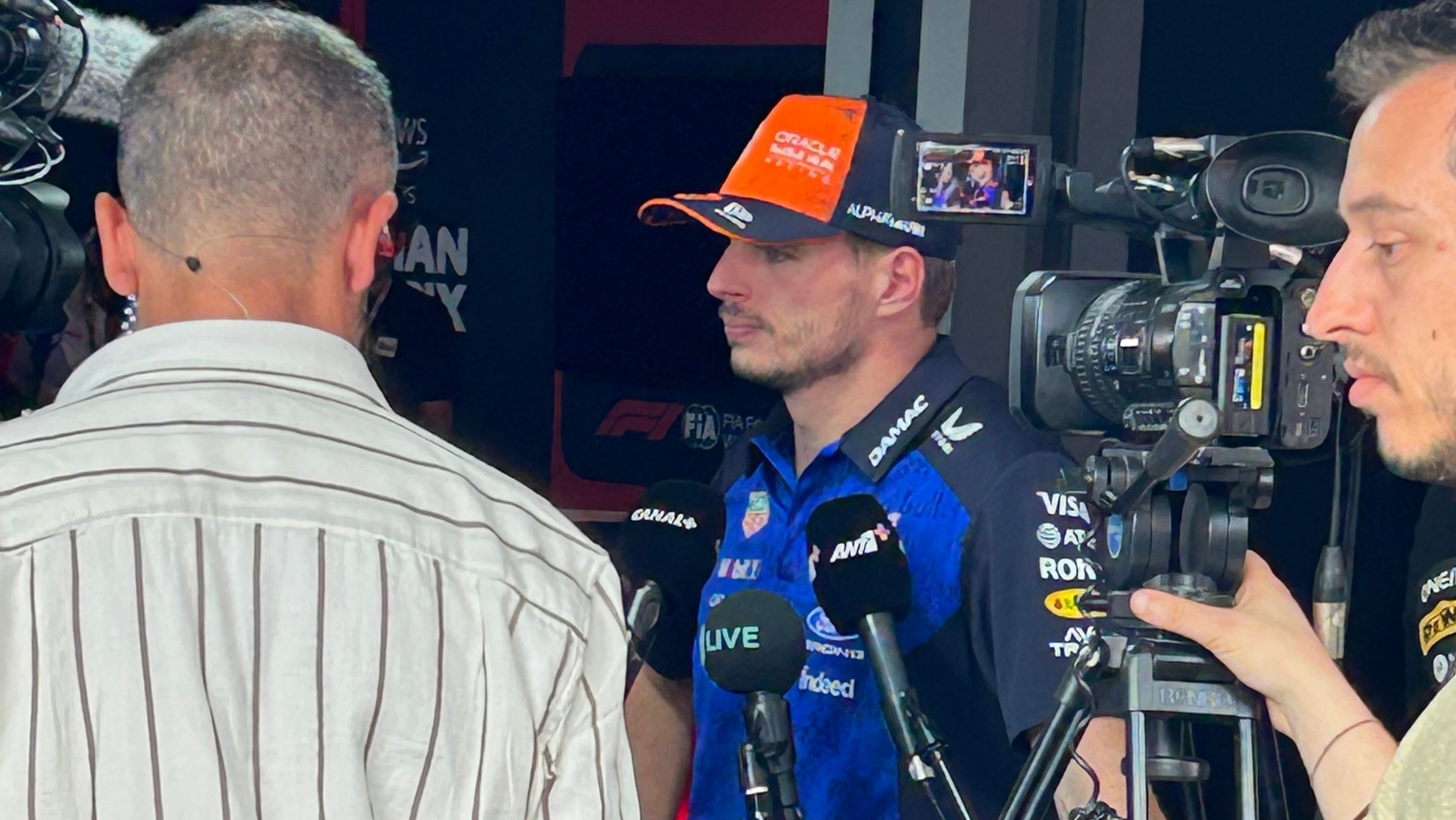
After dominating much of the previous regulatory cycle, Red Bull struggled at the beginning of 2026. Verstappen sits sixth in the Drivers' Championship and, according to Sky Sports F1's Karun Chandhok, has frequently been driving what has looked like the fourth-fastest car.
These aren't two drivers clinging to the only opportunities available to them.
They are two of Formula One's most highly regarded drivers.
And they have chosen to stay.
So why?
Because retaining exceptional talent during a transformation isn't necessarily about convincing people that everything is going brilliantly.
It's about giving them enough reason to believe that what is being built is worth staying for.
Don't sell certainty. Sell direction.
One of the biggest mistakes leaders can make when recruiting someone into a transformation is over-promising.
"We'll be market leaders in three years."
"This investment will transform the business."
"This new strategy is going to change everything."
"We're definitely going to double in size."
It might sound inspiring in an interview, but eventually reality arrives.
Formula One provides an extreme version of the same problem.
James Vowles cannot promise Carlos Sainz that Williams will win races in 2027.
Laurent Mekies cannot guarantee Max Verstappen another World Championship.
There are simply too many variables outside their control.
What they can provide is a credible direction of travel.
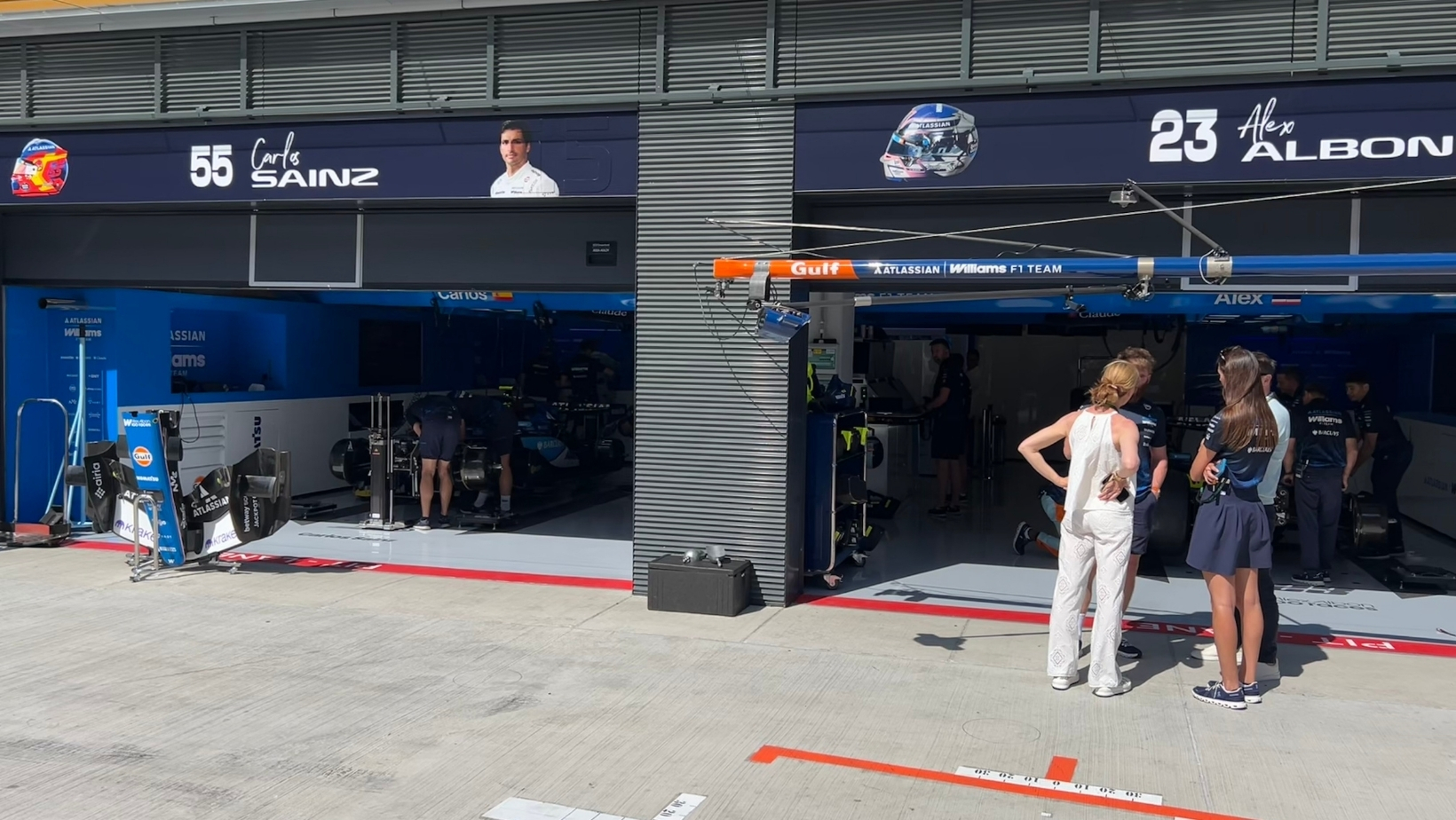
Sainz specifically pointed towards his belief in the people at Williams, the investment being made and the work taking place behind the scenes when explaining his decision to stay. Williams, meanwhile, described his extension as a show of faith in its long-term project.
Verstappen used remarkably similar language.
He spoke about having the "best people", seeing a clear vision for the team and believing in what Red Bull is building.
That's an important distinction.
Neither driver is saying:
"I know we're going to win."
They're effectively saying:
"I've seen enough to believe we can."
That's a far more credible proposition for businesses undergoing change.
Your best people need to see underneath the bonnet
There is another reason Sainz and Verstappen can make decisions that those outside their organisations might question.
They can see things we can't.
We see Sunday's race result.
They see the investment.
They see the recruitment.
They see the development programme.
They speak to the engineers.
They understand where the weaknesses are.
They can judge whether those weaknesses are actually being addressed.
And they see whether the leadership team's actions match its words.
The same applies to your best people.
If you're asking someone to commit several years of their career to a transformation, don't just show them the PowerPoint presentation.
Show them the work.
Let them understand the investment being made.
Be open about the problems.
Explain what hasn't worked.
Show them what you're doing differently.
Allow them access to the people responsible for delivering it.
Transparency can be more compelling than optimism.
Because talented people don't necessarily expect everything to be perfect.
They want evidence that the organisation understands why it isn't.
Give major talent a role in the rebuild
There's another interesting element to the Sainz announcement.
Williams didn't simply describe him as a driver.
James Vowles described Sainz as a leader of the team, highlighting the contribution he makes behind the scenes and the work he does with engineers in pursuit of performance.
That's significant.
Williams haven't simply told Sainz:
"Stay here and hopefully we'll build you a faster car."
They've made him part of building the faster car.
There's a huge business lesson here.
If you recruit an exceptional person into a long-term project and then expect them simply to perform their job description while the leadership team handles the transformation, don't be surprised if they eventually leave.
Major talent wants agency.
Ask:
What can this person influence?
Can they help shape the team?
Can they challenge strategy?
Can they influence recruitment?
Can they help determine priorities?
Can they see their fingerprints on the finished product?
There's a psychological difference between waiting for somebody else's project to succeed and helping build something you consider partly yours.
Ownership creates commitment.
Incentives shouldn't only reward the destination
Of course, money matters.
If you want exceptional people, particularly those with alternatives, you need to reward them appropriately.
But long-term incentive structures become dangerous when everything is attached to one distant outcome.
Imagine joining a five-year business transformation where the meaningful reward only arrives if the organisation hits a huge revenue or valuation target in year five.
What happens in years one, two and three?
Transformation needs milestones.
Formula One operates like this naturally.
The ultimate objective might be winning the World Championship.
But progress can also mean reliability improving.
A new power unit reaching its targets.
Aerodynamic development correlating between simulation and circuit.
Moving from the fourth-fastest car to the third.
Podiums becoming possible.
Then victories.
Then championships.
Indeed, Chandhok's analysis of Verstappen's decision was revealing: Red Bull's recent podiums and improving trajectory may have helped demonstrate that progress was actually happening.
Businesses should think similarly.
Long-term incentives can combine the ultimate objective with meaningful intermediate milestones.
Reward progress in market share, profitability, customer retention, operational performance, team capability or whatever measures genuinely indicate that the strategy is working.
Don't make talented people wait five years to discover whether their contribution counted.
Be honest when you've under-delivered
Perhaps the most important part of retaining talent during difficult periods is also the simplest.
Don't pretend things are going better than they are.
Williams cannot credibly tell Sainz that 11 points from the first 11 races represents the season they expected.
Red Bull cannot tell Verstappen that sixth in the championship represents success.
And they don't need to.
Strong relationships allow leaders to say:
This isn't where we expected to be.
Then comes the important part:
Here's why. Here's what we've learned. Here's what we're changing. And here's what we're seeing that gives us confidence.
That conversation requires considerably more leadership maturity than simply producing another optimistic five-year plan.
The moment employees realise the leadership team is unwilling to acknowledge reality, credibility disappears.
And once credibility disappears, the retention conversation becomes almost entirely about money.
Keep checking that the psychological contract still works
Signing a long-term contract shouldn't end the retention conversation.
It should start another one.
Businesses sometimes assume that because somebody has signed a three- or five-year agreement, the job is done.
It isn't.
The written contract might say five years.
The psychological contract is renewed constantly.
Am I still learning?
Do I still believe in the strategy?
Do I trust the leadership?
Am I being listened to?
Is the organisation delivering what it said it would?
Is my contribution recognised?
Are we genuinely progressing?
That's why leaders need regular, honest conversations with the people they most want to retain.
Not:
"Are you happy?"
But:
"Do you still believe in where we're going?"
And perhaps even more importantly:
"What are you seeing that worries you?"
Those conversations give leaders an opportunity to fix problems before a resignation letter tells them it's too late.
Don't confuse retention with captivity
There is one final lesson.
The objective isn't simply to make it difficult for somebody to leave.
Long contracts, restrictive clauses, deferred bonuses and golden handcuffs can all create retention on paper.
But there's an enormous difference between somebody who can't leave and somebody who doesn't want to leave.
Verstappen illustrates this particularly well.
His previous Red Bull contract reportedly contained a performance-related mechanism that could have allowed him to move elsewhere for 2027. He therefore had an opportunity to reconsider his future, yet instead has committed for even longer.
That's much more powerful than contractual captivity.
Your objective should be to create an organisation where exceptional people continue to choose the project.
The Motorsport To Business lesson
Neither Red Bull nor Williams can guarantee where they will be in two or three years.
Neither can any CEO.
Markets change.
Competitors improve.
Technology moves.
Strategies fail.
People leave.
Regulations change.
The challenge isn't to remove that uncertainty.
It's to create enough confidence that your best people are willing to travel through it with you.
That comes from combining competitive reward with credible leadership, transparency, ownership, evidence of progress and a clear direction of travel.
Perhaps that's ultimately what Red Bull and Williams have managed to sell.
Not a guarantee of championships.
Not a promise that everything will suddenly become easier.
But the opportunity to help build something.
And when exceptional people genuinely believe they can influence the outcome, the long-term project itself can become one of your strongest retention tools.
Questions for business leaders
If you're asking your best people to commit to your organisation for the next three to five years, ask yourself:
- Are we selling them a credible plan, or simply an ambitious promise?
- Can they see tangible evidence that we're investing behind the strategy?
- Do they have enough influence to feel they're helping build the future?
- Are our incentives rewarding meaningful progress as well as the final result?
- Are we honest when performance falls below expectations?
- And, most importantly, if they had the freedom to leave tomorrow, would they still choose to stay?
Because that's probably the real test of whether you've built something worth committing to.








.jpeg)
















.png)
.png)
.png)
.png)